Category: Business Growth

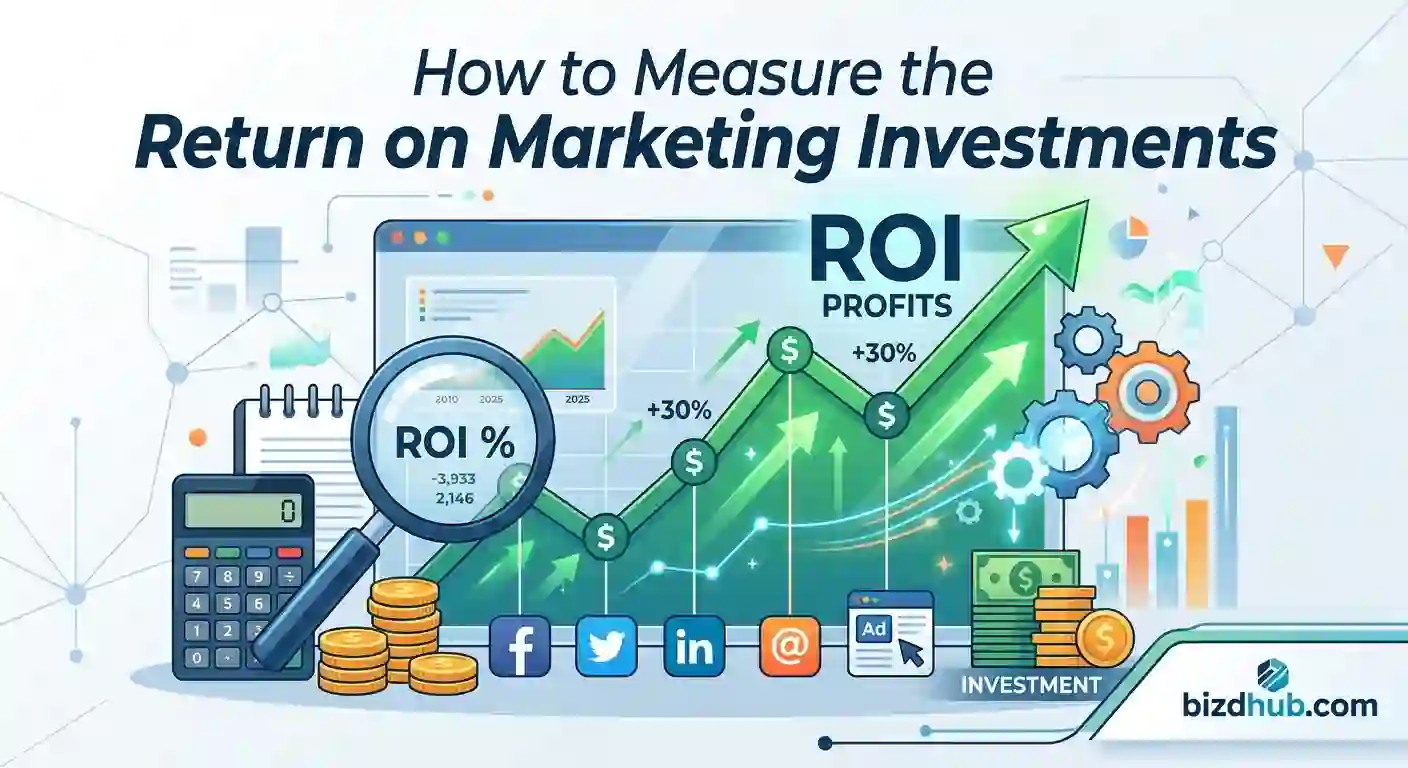
  • How to Measure the Return on Marketing Investments

    How to Measure the Return on Marketing Investments

    Starting a business offers the opportunity to solve problems, serve customers, and build financial independence. However, enthusiasm cannot replace research, planning, and sound financial decisions. New founders must evaluate demand, understand competitors, choose a suitable business model, and prepare for uncertainty before committing significant resources. These startup challenges can become manageable when entrepreneurs test assumptions and make decisions using evidence. Whether you are considering a freelance service, an online store, or a small business serving local customers, a practical approach can help you avoid preventable mistakes. This guide explains how to evaluate ideas, launch responsibly, and build a sustainable business.

    1. What Does It Take to Be an Entrepreneur?

    Entrepreneurship requires more than ambition. Successful founders need to recognize customer problems, communicate value, manage money, and make decisions without having complete information. They must also accept responsibility when an experiment fails and use the lessons to improve their next decision.

    Develop entrepreneurial thinking

    Entrepreneurial thinking means questioning assumptions rather than treating an idea as a proven opportunity. Instead of assuming customers will purchase a product, investigate how they currently solve the problem, what frustrates them, and what would justify switching providers.

    Build your capabilities through practical experience. Learn basic bookkeeping, negotiation, sales, and customer service. Seek advice from experienced business owners when a decision involves unfamiliar legal, tax, or financial obligations. You do not need to master every discipline, but you must understand enough to recognize problems and ask informed questions.

    2. How to Assess Your Opportunities Before Starting a Business

    A promising opportunity combines a real customer need, a reachable audience, and a business model capable of generating sustainable returns. Before choosing an idea, define the people you intend to serve and the specific problem you will solve.

    Research customers and competitors

    Start with conversations with potential customers. Ask how they address the problem today, how frequently it occurs, what alternatives cost, and what would encourage them to buy. Avoid relying exclusively on friends who may praise an idea without becoming paying customers.

    Next, study direct and indirect competitors. Compare their pricing, service quality, customer reviews, delivery options, and target markets. The U.S. Small Business Administration recommends combining market research with competitive analysis to understand customers and identify a competitive advantage.

    Evaluate demand and research costs

    Market research should answer specific questions, not simply produce a large spreadsheet. Use relevant industry reports, government statistics, customer interviews, search trends, and small-scale tests to estimate demand. Consider whether customers can afford your offer and whether you can reach them at a reasonable cost.

    For example, a prospective bookkeeping consultant could interview small-business owners, offer a paid trial, and compare the time required to deliver the service with the revenue earned. This reveals more than a survey asking whether people like the idea.

    Estimate the potential market cautiously. Distinguish the total number of possible customers from the smaller group you can realistically reach. Calculate expected revenue, direct costs, overhead, and the sales volume required to break even. If the numbers depend on unrealistic prices or immediate high sales, revise the model before investing.

    3. I Want to Start a Business but Have No Idea

    If you want to start a business but have no idea where to begin, start with your capabilities and access to customers rather than copying a popular trend. List your professional skills, practical knowledge, available time, financial limits, and the types of people you can reach.

    Generate three possible offers. These could include a specialized service, a digital product, a repair business, or a focused online shop. Compare them using customer demand, startup costs, competition, legal requirements, and your ability to deliver reliably.

    Test one idea before scaling

    Choose the option with the strongest evidence and create a small experiment. A service provider might offer a limited package to a few paying customers. A product seller could test a small batch instead of purchasing large quantities.

    Set a spending limit and define what would count as success before the test begins. For example, you might require several paid orders at a price that covers direct costs. If customers show interest but refuse to pay, investigate the pricing, value proposition, or target audience before spending more.

    4. Overcoming Common Startup Challenges

    Early businesses frequently struggle with uncertain sales, restricted cash, and inconsistent customer acquisition. These problems can reinforce one another: weak sales reduce available cash, while uncontrolled spending increases the pressure to find revenue quickly.

    Manage cash flow and customer acquisition

    Create a rolling cash forecast covering expected receipts, bills, taxes, payroll, and other commitments. Review it weekly and update assumptions when customers delay payment or costs increase. Keep business and personal transactions separate where practical, and maintain clear invoice terms and payment follow-up procedures.

    The European Commission’s EU Payment Observatory Annual Report 2025, published in 2026, reported that more than half of surveyed companies experienced difficulties associated with late payments in 2024. This illustrates why founders should assess customer payment practices instead of treating signed sales as immediately available cash.

    Choose marketing channels based on how customers make purchasing decisions. A local service may benefit from referrals and partnerships, while a specialist business-to-business provider may need targeted outreach and useful industry content. Track qualified leads, conversion rates, acquisition costs, and repeat purchases. Do not increase advertising spending until you have evidence that the channel can produce profitable customers.

    Protect delivery quality as demand grows. Document routine processes, clarify customer expectations, and address recurring complaints. Growth that overwhelms service capacity can damage the reputation that attracted customers in the first place.

    5. Build a Practical Business Plan

    A business plan should guide decisions rather than exist only to satisfy a lender. Keep it concise enough to update when customer behavior, costs, or competition changes. The U.S. Small Business Administration’s business-planning guidance identifies market analysis, company structure, customer segments, costs, and revenue streams as useful planning elements.

    Include these essentials:

    • Customer and offer: Define who buys, which problem you solve, and why your solution is useful.
    • Revenue model: Explain pricing, payment terms, sales channels, and repeat-purchase opportunities.
    • Financial forecast: Estimate initial expenses, monthly overhead, direct costs, sales, and working-capital needs.
    • Operating plan: Identify suppliers, essential tools, delivery processes, and responsibilities.
    • Milestones: Set measurable targets for validating demand, securing customers, and improving margins.

    Review performance monthly. Track contribution margin, cash available, customer retention, and sales conversion rather than relying on revenue alone. The European Commission’s 2025/2026 SME report highlights productivity as an important issue for European businesses. Founders should therefore examine whether technology and improved processes save time or increase output without compromising quality.

    6. How to Save a Struggling Business

    When performance declines, identify the underlying cause before making major changes. Review sales by product, customer type, and channel. Examine margins, repeat purchases, overdue invoices, customer complaints, and operating expenses. A business may have a marketing problem, an uncompetitive offer, weak delivery, or a pricing model that cannot cover its costs.

    Choose the right recovery strategy

    Prepare a short recovery plan with immediate cash priorities, specific actions, responsible people, and review dates. Stop discretionary spending that has no defensible return, follow up on unpaid invoices, and renegotiate supplier terms where appropriate. Do not cut essential quality controls or customer support without considering the longer-term consequences.

    Pivot strategies can help when evidence suggests a different customer group, product feature, or delivery method offers better potential. Imagine a small design agency whose one-off projects produce unpredictable income. Interviews reveal that existing clients need ongoing monthly design support. The agency could test a recurring service with a few customers, calculate delivery costs, and measure retention before changing its main offer.

    A pivot should address evidence, not boredom or a competitor’s latest trend. Set clear criteria for deciding whether the experiment is working. If losses continue and no credible recovery path exists, compare restructuring, selling, or orderly closure. Seek qualified legal and accounting advice before making decisions affecting debts, employees, contracts, or tax obligations.

    7. Common Mistakes to Avoid

    Avoid these preventable errors when launching and developing a company:

    • Spending heavily on branding, premises, or inventory before validating demand.
    • Setting prices without calculating labor, delivery, overhead, and taxes.
    • Trying to serve everyone instead of focusing on a reachable customer group.
    • Treating social engagement or website visits as proof of purchasing intent.
    • Expanding before operations and customer service can handle additional demand.
    • Ignoring registration, licensing, data protection, insurance, or industry-specific rules.

    The correct requirements depend on your location and business activity. Check official government guidance before launch rather than assuming rules are identical across US states or European countries.

    Conclusion:

    Building a company is a process of testing, learning, and improving—not a single decision made with perfect information. Start with a defined customer problem, validate demand, understand your costs, and establish simple measures of progress. The best way to handle startup challenges is to replace guesswork with small experiments and disciplined financial decisions. Choose one business idea this week, speak with potential customers, and set a realistic test with a clear budget. Use what you learn to decide whether to proceed, adjust the offer, or explore a stronger opportunity. Consistent evidence-based action creates a more credible foundation for long-term growth.

    Frequently Asked Questions

    What are the most common startup challenges?

    Founders often face uncertain demand, limited funding, intense competition, and difficulty attracting reliable customers. The priority depends on the sector, business model, and available resources.

    How can I choose a business idea?

    Compare customer demand, your relevant skills, startup costs, competitive alternatives, and the feasibility of reaching buyers. Test the strongest option before making major commitments.

    What does it take to be an entrepreneur?

    It takes practical judgment, financial discipline, communication skills, adaptability, and willingness to learn from customers. Specialist advice is valuable when legal, tax, or technical decisions exceed your expertise.

    When should a business change direction?

    Consider changing the offer or target market when repeated tests reveal weak demand, poor margins, or a customer problem that is less important than expected.

    Can a small company grow without investors?

    Some businesses can fund gradual growth through customer revenue and retained earnings. Whether this works depends on cash flow, operating costs, and the speed of expansion required.

     

  • A Practical Guide for New Entrepreneurs

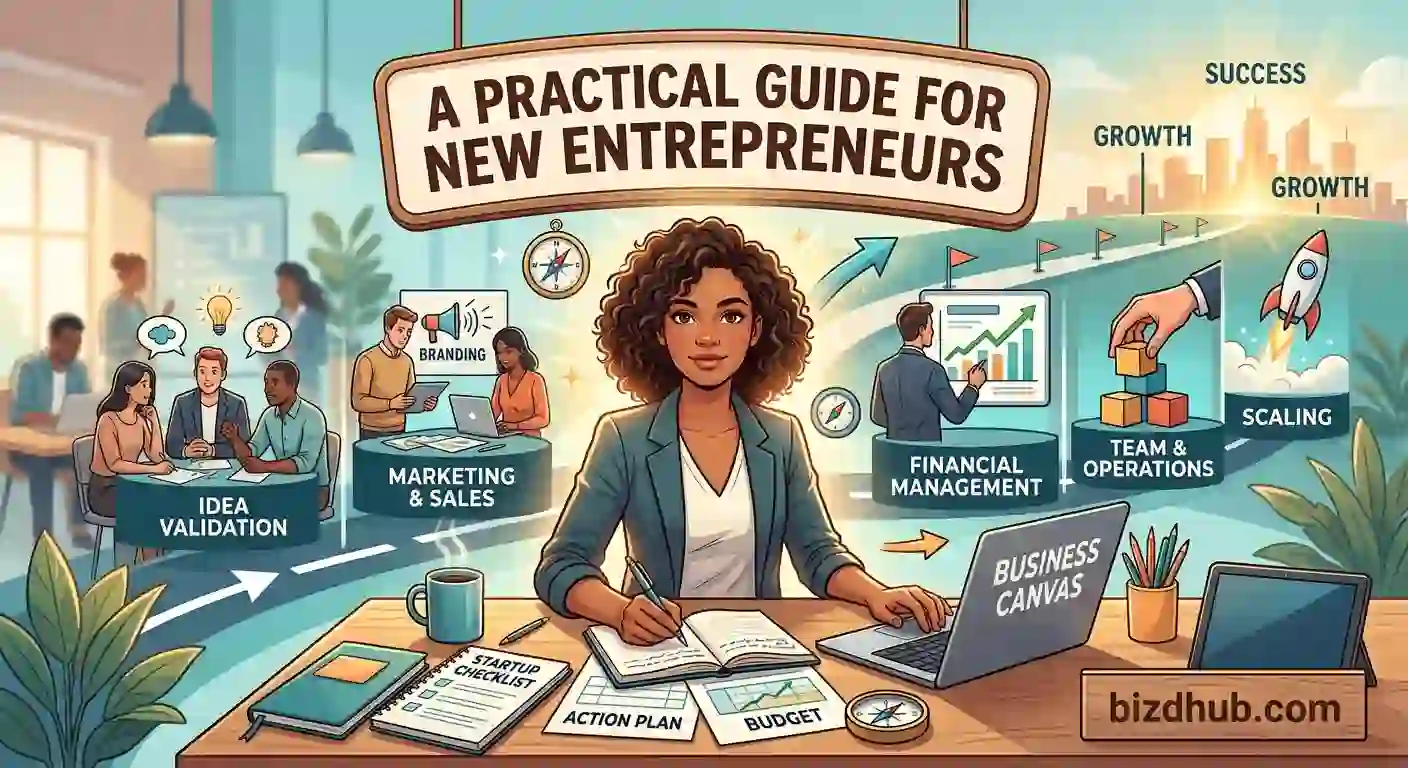
    A Practical Guide for New Entrepreneurs

    Starting a business can be exciting, but turning an idea into a sustainable company requires much more than enthusiasm. New founders must understand customers, evaluate opportunities, manage limited resources, and make decisions without having perfect information. These realities create startup challenges that can affect everything from funding and marketing to operations and hiring. A practical approach is to validate an opportunity, understand the market, build a realistic business model, and remain willing to adapt as evidence changes. Entrepreneurs who combine disciplined planning with entrepreneurial thinking are better prepared to handle uncertainty and build businesses that can grow sustainably.

    Understand the Real Challenges of Starting a Business

    Entrepreneurship involves uncertainty. A promising idea can fail if customers do not have a strong enough reason to pay for it, while a simple idea can succeed when it solves a clear and valuable problem.

    Common startup challenges include limited capital, uncertain demand, strong competition, inconsistent cash flow, difficulty finding customers, and the need to make important decisions with limited information. New founders may also underestimate how much time is required for sales, customer support, administration, compliance, and day-to-day operations.

    The first step is therefore not launching quickly. It is understanding whether the opportunity deserves your time and money.

    How to Assess Your Opportunities Before Starting a Business

    Before investing significant resources, evaluate the opportunity from several angles.

    1. Identify a Real Customer Problem

    Ask who has the problem, how frequently it occurs, how customers currently solve it, and whether they are willing to pay for a better solution.

    Customer interviews, surveys, competitor reviews, online communities, and conversations with potential buyers can reveal useful evidence. Avoid relying only on opinions from friends and family because their feedback may not represent your target market.

    2. Study Existing Competitors

    Competition is not necessarily a reason to abandon an idea. It can demonstrate that customers already spend money in the category.

    Study competitors’ pricing, positioning, customer reviews, distribution channels, strengths, and weaknesses. Look for an underserved segment or a meaningful way to deliver better value.

    3. Test the Economics

    Estimate your expected selling price, customer acquisition cost, operating expenses, gross margin, and break-even point.

    You do not need perfect forecasts at the beginning. You need realistic assumptions that can be tested.

    4. Start With a Small Validation

    Instead of building a complete product immediately, create a minimum viable version. A landing page, service package, prototype, sample, or manual version can help determine whether customers actually respond.

    This approach reduces startup challenges because you can learn from the market before committing substantial capital.

    I Want to Start a Business but Have No Idea

    Not having a business idea does not mean you are unsuitable for entrepreneurship. Many opportunities begin with observing problems rather than inventing something completely new.

    Start by examining your skills, work experience, industries you understand, and problems you regularly see. Then look for situations where people or businesses already spend money but remain dissatisfied with the available solutions.

    You can also explore growing categories such as business software, professional services, ecommerce support, digital marketing, automation, education, and specialized B2B services. However, market growth alone is not enough. The opportunity should match your capabilities, resources, location, and ability to reach customers.

    A useful exercise is to create a list of ten problems you understand personally or professionally. Research each problem and eliminate ideas where demand appears weak, competition is overwhelming, or the economics do not make sense.

    What Does It Take to Be an Entrepreneur?

    Entrepreneurship requires more than confidence. Successful founders need the ability to learn quickly, communicate clearly, sell, manage resources, make decisions under uncertainty, and accept feedback.

    Entrepreneurial thinking means treating assumptions as hypotheses that need testing. Instead of saying, “Customers will definitely buy this,” ask, “What evidence would prove that customers want this?”

    This mindset is particularly important when facing startup challenges because early assumptions are often incomplete. A founder who can change direction based on reliable evidence has an advantage over someone who becomes emotionally attached to an original plan.

    Entrepreneurs should also understand their personal limits. Starting a business while working full-time, for example, requires realistic time management. A business model that requires twelve hours of daily attention may be unsuitable for someone who has only two or three hours available.

    Build a Simple Business Model

    Once an opportunity appears promising, define how the business will create and capture value.

    Answer these questions:

    • Who is the target customer?
    • What specific problem are you solving?
    • What are customers willing to pay?
    • How will you reach them?
    • What will it cost to deliver the product or service?
    • How will the business make a profit?
    • What resources are required to operate?

    Keep the first version simple. Complex business models can make it difficult to identify which assumption is causing poor performance.

    Your early objective should be proving that customers will pay profitably, not creating a perfect organization from day one.

    How to Save a Struggling Business

    A struggling business should not automatically receive more money. First determine why performance is weak.

    Examine revenue trends, gross margins, customer retention, acquisition costs, operating expenses, cash flow, and product-level profitability. Separate temporary problems from structural problems.

    If customers are interested but margins are poor, pricing or costs may need adjustment. If margins are healthy but customer acquisition is weak, the sales or marketing strategy may need improvement. If customers leave quickly, the product or customer experience may be the underlying problem.

    Do not protect an unsuccessful product simply because you have already invested money in it. Past spending is a sunk cost. Future decisions should depend on expected future returns.

    Pivot Strategies When the Original Plan Fails

    A pivot means making a significant change while retaining useful knowledge or resources from the existing business.

    Possible pivot strategies include changing the target customer, modifying the product, changing the pricing model, moving from B2C to B2B, changing distribution channels, or focusing on a more profitable customer segment.

    A pivot should be based on evidence rather than panic. Before changing direction, identify what is working and what is failing.

    For example, a software startup may discover that individual consumers are unwilling to pay enough for its product, while small businesses find the same tool valuable. Moving toward the B2B market could therefore be a rational response to evidence.

    However, not every failing business needs a pivot. Sometimes the better decision is to stop. Continuing indefinitely without evidence of demand can destroy additional capital and time.

    Manage Money and Cash Flow Carefully

    Revenue does not automatically mean financial health. A company can report strong sales and still experience cash-flow problems because customers pay late, inventory absorbs capital, or operating costs rise too quickly.

    Create a basic cash-flow forecast showing expected income and expenses. Maintain a realistic emergency buffer where possible, and avoid unnecessary fixed costs during the early stage.

    Founders should distinguish between essential spending and spending that merely makes the business look established.

    A professional office, expensive software stack, large team, or extensive branding may feel important, but these investments should follow demonstrated demand rather than precede it.

    Learn Before You Scale

    Scaling too early can magnify weaknesses. If customer acquisition is expensive, increasing advertising may simply increase losses. If operations are inefficient, adding more customers can create more complaints and higher costs.

    Before scaling, document the processes that repeatedly produce good results. Measure conversion rates, delivery times, customer retention, margins, and operational capacity.

    The goal is to build a repeatable system rather than depend entirely on the founder’s personal effort.

    Technology can support this process through customer relationship management, analytics, automation, accounting tools, collaboration systems, and AI applications. But technology should solve a defined problem rather than become an expensive project without measurable value.

    Common Mistakes New Entrepreneurs Should Avoid

    Several mistakes repeatedly create unnecessary problems.

    First, starting without validating demand can result in months of work on something customers do not want.

    Second, spending heavily before achieving product-market evidence can reduce financial flexibility.

    Third, trying to serve everyone can make positioning unclear and marketing expensive.

    Fourth, ignoring cash flow can create problems even when sales appear healthy.

    Fifth, refusing to change direction because of emotional attachment can make startup challenges worse.

    Finally, copying another company’s strategy without understanding its market, resources, and customer base can produce poor results. What works for one business may not work for another.

    Conclusion

    Building a business requires more than finding an attractive idea. Entrepreneurs need to validate demand, understand customers, control costs, measure performance, and remain adaptable when evidence changes. The most effective response to startup challenges is not to avoid uncertainty but to reduce it through research, small experiments, disciplined financial management, and continuous learning. If an idea does not work, entrepreneurs should identify the reason, decide whether to improve, pivot, or stop, and protect their limited resources. A practical approach gives new founders a stronger foundation for creating a sustainable business rather than simply launching one.

    FAQ

    What are the biggest startup challenges for new entrepreneurs?

    The most common startup challenges include validating demand, managing limited capital, finding customers, competing effectively, maintaining cash flow, and adapting when the original business assumptions prove incorrect.

    How can I assess my opportunities before starting a business?

    Research the customer problem, existing competitors, market demand, pricing, operating costs, and potential profit. Then test the idea with a small product, service, prototype, or paid offer before making a major investment.

    I want to start a business but have no idea. What should I do?

    Start with problems rather than random business ideas. Examine your skills, experience, industries you understand, and problems people already spend money to solve. Research those problems and test the strongest opportunities.

    What does it take to be an entrepreneur?

    Entrepreneurship requires problem-solving, communication, sales ability, financial discipline, adaptability, learning, and the ability to make decisions despite uncertainty. Confidence alone is not enough.

    How can I save a struggling business?

    First identify the financial and operational cause of the problem. Review revenue, margins, customer retention, acquisition costs, expenses, and cash flow. Then fix the most important underlying problem instead of simply increasing spending.

    When should a business use pivot strategies?

    Consider a pivot when reliable evidence shows that the current customer, product, pricing model, or distribution approach is not producing a sustainable business. A pivot should be evidence-driven rather than an emotional reaction to temporary setbacks.


  • Key Steps to Build a Successful Business

    Key Steps to Build a Successful Business

    Building a successful business requires more than a promising idea. Entrepreneurs need to understand customers, control expenses, make informed decisions, and prepare for changing market conditions. Business planning and development provide a practical framework for turning an opportunity into a sustainable company. Whether you are launching a startup or improving an established organization, your decisions should reflect customer demand, available resources, and measurable objectives. A clear approach helps business owners identify priorities, recognize risks, and invest with greater confidence. This guide explains the essential steps for establishing strong foundations, improving operations, and pursuing profitable growth without taking unnecessary risks.

    1. Business Planning and Development: Build a Strong Foundation

    A business plan explains what a company offers, who its customers are, how it earns revenue, and what resources it needs. The US Small Business Administration recommends market research, competitive analysis, business planning, and startup cost calculations as important preparation steps.

    Begin by answering four questions:

    • What specific problem does your product or service solve?
    • Who experiences this problem and can afford your solution?
    • Why should customers choose your business over alternatives?
    • What will it cost to deliver the promised value?

    Research your intended market before committing significant money. Interview potential customers, study competing offers, compare prices, and examine purchasing behavior. Positive feedback alone does not prove demand; stronger evidence comes from paid trials, preorders, or repeat purchases.

    Next, estimate startup expenses, monthly operating costs, expected sales, and working capital requirements. Separate assumptions from confirmed information so you can revise forecasts as evidence improves.

    Treat your plan as a working management document. Review financial performance regularly, investigate unexpected costs, and update your priorities when customer behavior or competitive conditions change.

    2. Planning for Success: Set Clear Business Goals

    A business vision describes the future you want to build. Objectives translate that vision into practical outcomes that employees and managers can understand.

    Avoid vague targets such as becoming a market leader. Instead, define a measurable objective, a deadline, an accountable person, and a realistic budget. For example, a service company might aim to improve customer retention while maintaining its existing service standards.

    Set priorities according to their commercial importance. A startup may need to validate its pricing before hiring additional employees, while an established retailer may need to improve inventory accuracy before opening another branch.

    Useful objectives can address:

    • Revenue and profitability.
    • Customer satisfaction and retention.
    • Operational efficiency.
    • Product quality and delivery.
    • Employee development.

    Choose indicators that reveal whether the business is improving, rather than collecting data simply because it is available. Review progress at scheduled intervals and investigate missed targets without automatically increasing spending.

    Effective planning for success in business also requires flexibility. If evidence invalidates an assumption, change the approach instead of protecting an unrealistic goal.

    3. Strategic Planning for Small Businesses

    Smaller companies often face limited budgets, small teams, and competing demands on management time. Their strategy must identify where limited resources can produce the strongest commercial results.

    Develop a strategic growth plan by evaluating three factors: customer demand, competitive advantage, and operational capacity. An opportunity is attractive only when customers want the offer, the company can compete effectively, and delivery costs allow sustainable returns.

    Create a quarterly action plan that specifies priorities, responsible employees, deadlines, budgets, and performance indicators. Useful measures include gross margin, customer acquisition cost, repeat purchases, conversion rates, and available cash. Select indicators that suit your business model instead of adopting every metric used by larger companies.

    For example, a small software provider might discover that customers frequently request a particular reporting feature. Rather than developing several features simultaneously, the company could test the most requested improvement with existing customers and measure its effect on renewals.

    Strategic planning for small businesses should also identify activities to postpone or discontinue. A company cannot pursue every opportunity at once. Concentrating on a clearly defined customer segment may produce better results than spreading marketing expenditure across unrelated audiences.

    Review assumptions quarterly, or sooner when significant changes occur. Update the plan when market evidence, financial conditions, or internal capabilities no longer support the original direction.

    4. Business Location Strategy

    Location influences operating expenses, access to customers, recruitment, logistics, and regulatory obligations. The right choice depends on how a company delivers its products or services.

    A physical retailer may benefit from visibility and convenient access, while a digital consultancy may operate effectively with a smaller office or a remote team.

    Before committing to premises, compare:

    • Rent, utilities, maintenance, and insurance.
    • Transport access and customer convenience.
    • Availability of suitable employees.
    • Local competition and customer demand.
    • Lease conditions, permits, and exit costs.

    Calculate the sales needed to cover fixed expenses before signing a long-term agreement. Where practical, test demand through temporary premises, shared offices, or online sales. This reduces the risk of committing substantial capital before the location proves commercially suitable.

    5. Business Transformation Strategies

    Business transformation should address a measurable problem rather than follow a fashionable trend. Start by examining customer complaints, operational delays, employee feedback, financial results, and technology limitations.

    A structured business transformation strategic diagnosis process distinguishes underlying causes from visible symptoms. If orders arrive late because inventory records are inaccurate, increasing advertising expenditure will not solve the operational problem.

    Possible improvements include automating repetitive administration, connecting disconnected systems, simplifying customer onboarding, or redesigning inefficient workflows.

    The OECD, BCG, and INSEAD’s 2025 report, The Adoption of Artificial Intelligence in Firms, examines barriers to AI implementation, including skills, organizational readiness, and uncertainty about returns. Its findings support a practical principle: technology adoption requires management attention and suitable capabilities, not merely purchasing software.

    Before introducing a new tool, define its intended benefit, implementation cost, training requirements, security controls, and success measures. Test it on a limited workflow before expanding its use. Protect confidential information and require human review where errors could materially affect customers or business decisions.

    Record the results and compare them with the original baseline. Continue improvements that demonstrate value, revise those that underperform, and discontinue experiments that cannot justify their costs.

    6. Business Resilience Planning

    Every company faces potential disruption, including supplier failures, cyber incidents, equipment breakdowns, employee absences, and unexpected cost increases. Preparation can reduce the damage these events cause.

    Business resilience planning begins by identifying essential activities and determining which interruptions would threaten customers, revenue, or legal obligations.

    Create a continuity checklist covering:

    • Critical suppliers and alternative sources.
    • Secure data backups and recovery procedures.
    • Emergency contacts and employee responsibilities.
    • Essential equipment, software, and communication channels.
    • Insurance coverage and access to emergency funds.

    Consider a small online retailer whose main order-processing platform becomes unavailable. A documented manual procedure, accessible customer records, and an alternative communication channel could help staff maintain essential service while systems are restored.

    Test continuity arrangements rather than assuming they will work. Check whether backups can be recovered, alternative suppliers can deliver, and employees understand their responsibilities.

    The appropriate financial reserve depends on operating costs, payment cycles, income volatility, and access to funding. Review these factors regularly with an accountant or financial adviser when necessary.

    7. Business Expansion Plan

    Growth creates opportunities, but expanding too quickly can strain cash flow, staff, and service quality. Before entering a new market or adding a product line, confirm that existing operations can handle additional demand.

    A business expansion plan should include:

    • Evidence of customer demand.
    • Setup costs and working capital requirements.
    • Expected revenue, margins, and customer acquisition costs.
    • Staffing, supply capacity, and quality controls.
    • Milestones for reviewing performance.

    Prepare conservative forecasts that account for slower sales, higher expenses, and delayed payments. Revenue growth alone does not guarantee profitability.

    Imagine a retailer considering a second location. Before signing a lease, management should estimate local demand, staffing expenses, inventory requirements, and the additional sales needed to cover fixed costs. A temporary sales campaign could test demand before a permanent commitment.

    Introduce expansion in stages. Release further investment when earlier results justify it, and establish clear conditions for pausing the project. Measure customer experience and operational stability alongside financial performance.

    8. International Growth Strategy

    International markets can provide new customers, but overseas sales introduce additional commercial and regulatory considerations. Businesses must understand local competitors, delivery costs, payment practices, product standards, taxation, and customer expectations.

    An international growth strategy should begin with a shortlist of suitable countries. Compare demand, purchasing power, distribution options, language requirements, and the total cost of serving customers.

    The European Commission’s 2025 study of the European Union’s SME internationalisation strategy examines gaps and opportunities in support for smaller businesses entering overseas markets. Its relevance is practical: international expansion requires access to appropriate information, support, and market-entry capabilities.

    For each potential market, investigate applicable regulations, intellectual property protection, data protection obligations, and contractual requirements. Exporters should also evaluate customs procedures, tariffs, shipping arrangements, and local partners.

    Test one market before making a large commitment. A limited advertising campaign, distributor relationship, or carefully selected customer group can reveal whether demand justifies further investment.

    Track conversion rates, delivery performance, customer acquisition costs, and net margins after all market-specific expenses. Expand only when the commercial evidence and compliance arrangements support sustainable operations.

    9. The Role of a Business Development Strategist

    A business development strategist can help identify partnerships, evaluate new revenue opportunities, assess competitive positioning, and organize market-entry decisions.

    External expertise is most valuable when a company lacks specialist knowledge or needs independent analysis before a major investment.

    Before hiring, define the business problem, expected deliverables, project timeline, and evaluation criteria. Check references, relevant experience, and the proposed fee structure. Compare the likely commercial benefit with the total cost, and avoid paying for reports that offer no practical implementation plan.

    10. Common Business Planning Mistakes

    Avoid these common mistakes:

    • Launching without evidence of paying customer demand.
    • Forecasting sales without considering cash-flow timing.
    • Expanding before existing operations are stable.
    • Buying technology without training employees.
    • Ignoring regulatory responsibilities and cybersecurity.
    • Continuing unsuccessful projects because money has already been spent.

    Use evidence to challenge assumptions and assess decisions on their future value. Seek qualified legal, accounting, or technical advice when the consequences exceed your expertise.

    11. Conclusion

    Building a successful company requires clear priorities, financial discipline, customer insight, and the willingness to adapt. Business planning and development give owners a structured way to evaluate opportunities and make informed choices. Begin by validating demand, establishing measurable objectives, and protecting operational stability. Then test improvements and expansion opportunities against evidence rather than assumptions. Choose one priority today, assign responsibility, and set a deadline. Review the outcome before committing further resources. Consistent, evidence-based decisions provide a more dependable foundation for sustainable growth than ambition without execution.

    12. Frequently Asked Questions

    What is business planning and development?

    It is the ongoing process of defining business objectives, assessing opportunities, allocating resources, and improving commercial performance.

    What should a business plan include?

    Include your target market, offer, competitive position, sales approach, financial forecasts, operating requirements, and measurable objectives.

    How can a small business improve profitability?

    Review margins by product or service, reduce avoidable costs, and focus on customers and activities that generate sustainable returns.

    When should a company expand internationally?

    Consider entering another country when demand is credible, domestic operations are stable, and delivery costs and compliance obligations are understood.

    How often should a business strategy be reviewed?

    Review performance monthly where practical and reassess strategic priorities quarterly or after significant market changes.

  • Key Steps for Sustainable Business Growth

    Key Steps for Sustainable Business Growth

    Sustainable business growth requires more than higher sales. Companies need clear priorities, disciplined investment, capable teams, and flexibility when customer needs, technology, regulations, or competition change. A strategic growth plan connects these elements by turning ambition into measurable decisions. For business owners and executives in the USA and Europe, that discipline matters as leaders face weaker confidence, geopolitical uncertainty, cyber risks, and uneven returns from technology investment. Here we explain how leaders can align teams, strengthen execution, develop digital products, evaluate international opportunities, and adjust important decisions for sustainable long-term business performance over time rather than unsupported assumptions.

    Why Sustainable Growth Needs a Strategic Growth Plan

    Sustainable growth increases business value without making operations fragile. Revenue can rise while margins, retention, or customer concentration worsen. Leaders should define “healthy growth” before choosing initiatives.

    A useful strategic growth plan should answer five questions:

    • Which customers and markets deserve priority?
    • What differentiated value can the company defend?
    • Which capabilities must be strengthened before scaling?
    • How much capital and attention can each initiative receive?
    • What evidence would justify continuing, changing, or stopping investment?

    The 2026 PwC Global CEO Survey shows why disciplined choices matter. Only 30% of surveyed CEOs were confident about their companies’ revenue growth over the next 12 months, while geopolitical risk, cyber risk, and technological disruption remained major concerns. Invest selectively with clear controls.

    Integrated Strategy Framework Development: Align Goals, Resources and Teams

    Integrated strategy framework development brings business functions into one decision system. Without alignment, sales may chase volume, marketing may optimize leads, product may add features, and finance may restrict spending. Departments can hit individual targets while the company misses its most important priorities.

    Begin with a limited number of enterprise outcomes, such as increasing recurring revenue, improving retention, entering a segment, or raising operating efficiency. Connect each outcome to required people, technology, capital, partnerships, data, and leadership attention.

    A practical framework should give each initiative:

    • An accountable owner
    • A measurable outcome and deadline
    • Required resources
    • Dependencies and risks
    • A review method

    This structure improves trade-offs. Suppose a European software company has €500,000 for expansion. Management could select two markets, define evidence thresholds, and release funding in stages. If acquisition costs or conversion rates fail, investment can be redirected.

    PwC’s 2025 Pulse Survey found that 42% of executives identified resource constraints among the top three barriers to achieving corporate strategy. Resource allocation is therefore a strategic decision, not simply annual budgeting.

    Building Your Strategic Growth Plan: Goals, Priorities, KPIs and Roadmap

    Once direction is established, translate it into a manageable portfolio of priorities. Do not treat every promising idea as strategic. Rank opportunities by potential value, demand evidence, investment, time to impact, capability fit, and risk.

    Set targets at three levels:

    1. Strategic outcomes: results such as entering a segment or increasing recurring revenue.
    2. Leading indicators: signals such as qualified pipeline, activation, retention, or conversion.
    3. Financial outcomes: revenue, gross margin, cash generation, or return on invested capital.

    A roadmap should show sequence and dependencies. For an international launch, validation may precede hiring, while compliance may precede launch. Sequencing prevents spending before prerequisites are proven.

    The strategic growth plan should define decision gates. An initiative might receive €50,000 for validation, €150,000 after customer testing, and further funding only after economic targets are achieved. This limits downside while preserving the ability to scale strong opportunities.

    Creating a Culture of Strategy Execution: Leadership, Accountability and Communication

    Execution depends on what happens after the strategy meeting. The strategic growth plan must be visible in daily priorities, not stored in a presentation. Creating a culture of strategy execution means making priorities visible in everyday decisions, giving people authority to act, and holding owners accountable for measurable results.

    Each strategic initiative should have one accountable leader. Teams should understand outcomes, resources, decision rights, dependencies, and escalation routes. Weekly operating reviews can address actions and blockers, while monthly or quarterly reviews can examine whether the underlying assumptions remain valid.

    Leadership behavior matters. If executives repeatedly introduce urgent projects outside agreed priorities, employees learn that strategy is optional. Leaders should protect high-value work and explain rejected or delayed requests.

    Communication must cross functions. Sales needs product priorities; product teams need customer and commercial context; finance needs transparent investment assumptions. PwC’s 2026 Global CEO Survey reports that companies with stronger foundations are pulling ahead in AI deployment, while many organizations still struggle to turn AI investment into financial benefits. Execution discipline is increasingly about connecting technology decisions with operating-model changes, not merely approving new tools.

    Digital Product Strategy: Align Products, Technology and Customer Value

    Digital products can support scalable growth, but building software or adding AI features is not itself a growth strategy. Start with the customer problem, target user, value proposition, business model, and evidence that the problem is worth solving.

    A practical digital product strategy should connect:

    • Customer research and validation
    • Product positioning and pricing
    • Product roadmap and technology architecture
    • Security and compliance
    • Adoption and retention metrics

    Validate before overbuilding. Interviews, prototypes, limited releases, usage data, and experiments can reveal whether customers value a proposed solution. This matters for SMEs, where large technology investments can consume cash needed for sales or service.

    The OECD’s 2025 D4SME Survey found that digitalization can help SMEs access new markets and improve operational efficiency, while also highlighting barriers involving technology adoption, business-process adaptation, and digital security. The lesson is practical: choose technology according to a measurable business problem and ensure the organization can actually use it.

    Global Expansion Strategies: Scale Into New Markets Carefully

    International growth should begin with market attractiveness, not geography alone. Global expansion strategies should evaluate demand, competition, pricing, regulation, tax, localization, distribution, talent, infrastructure, currency exposure, and geopolitical risk.

    A disciplined market-entry process can follow five stages:

    1. Screen potential markets using consistent criteria.
    2. Estimate customer economics and operating requirements.
    3. Validate demand through a limited test.
    4. Establish compliance, support, and delivery capabilities.
    5. Scale only after predefined thresholds are met.

    Gartner’s 2025 research recommends data-driven evaluation of new geographic markets to assess attractiveness and risk. Its research on international expansion also highlights technology readiness, cybersecurity, regulatory compliance, cloud, and AI as considerations for market entry.

    Consider a US B2B software company entering Germany. Rather than building a large operation immediately, it could test demand through localized campaigns, a small sales presence, and channel partners. If demand, conversion, retention, compliance costs, and customer economics meet thresholds, management can increase investment. This reduces the risk of confusing market size with achievable opportunity.

    Measuring Progress and Adjusting the Plan

    Growth measurement should reveal durable economic value. A dashboard can combine revenue, margin, retention, acquisition cost, cash conversion, adoption, capacity, and market performance.

    Review results against the strategic growth plan at a fixed cadence. When performance misses expectations, determine whether the cause is execution, market conditions, insufficient resources, or a flawed assumption. Then continue, modify, pause, or stop.

    Do not change direction because of one weak month. Look for meaningful patterns before shifting resources, but do not protect a failing initiative simply because money was spent.

    Common Mistakes to Avoid

    One common mistake is pursuing too many priorities. This dilutes management attention and makes accountability unclear.

    Another is measuring activity instead of outcomes. More meetings, traffic, features, or leads do not automatically mean stronger economics.

    Businesses also underestimate readiness. Weak support, fragmented data, poor onboarding, inadequate security, or insufficient working capital can turn demand into operational problems.

    Finally, avoid treating strategy as a document that is written once and forgotten. Conditions change, so the assumptions behind major decisions need regular review.

    Conclusion

    Sustainable growth comes from disciplined choices, not pursuing every opportunity. Leaders should connect market evidence with financial capacity, organizational capability, technology, execution, and risk management. A strategic growth plan provides structure, but its value depends on consistent action and learning.

    Start by identifying your strongest growth opportunity, documenting the assumptions behind it, and assigning one accountable owner. Set measurable checkpoints, test the opportunity with controlled investment, and review evidence before committing additional resources. This approach gives your business room to grow while protecting the flexibility needed when conditions change.

    FAQs

    What should a growth strategy include?

    It should define target customers, competitive positioning, priorities, resources, KPIs, risks, and decision rules for investment.

    How often should a strategic growth plan be reviewed?

    Review operating performance regularly and reassess major assumptions at least quarterly, or sooner when market conditions change materially.

    Should every business pursue international expansion?

    No. Expansion makes sense only when demand, unit economics, capabilities, compliance requirements, and risk justify the move.

    How can SMEs use AI for growth?

    Start with specific use cases that improve customer service, analysis, product development, marketing, or internal efficiency. Measure the financial or operational outcome before expanding deployment.

    What makes a strategy executable?

    Clear ownership, decision authority, measurable outcomes, realistic resources, consistent communication, and regular review make strategic choices easier to turn into action.


  • How to Save Money on a Low Income: 15 Practical Strategies That Work

    How to Save Money on a Low Income: 15 Practical Strategies That Work

    Learning how to save money on a low income can feel impossible when essential bills already consume most of each paycheck. A workable savings strategy does not begin with extreme sacrifices. It begins with understanding spending, protecting necessities, and creating a repeatable system for saving. The Federal Reserve reported in 2026 that 55% of U.S. adults had savings covering three months of expenses in 2025, while only 21% of adults with family income below $25,000 reported that level of savings. That gap shows why practical systems matter. This guide explains ways to build financial breathing room without relying on budgets.

    1. Start With a Complete Spending Snapshot

    To learn how to save money on a low income, record every expense for one month. Include rent or mortgage, groceries, transportation, utilities, insurance, debt payments, subscriptions, eating out, fees, and cash purchases.

    This first step matters because memory is unreliable. A complete spending snapshot shows which costs are fixed, which can be negotiated, and which are quietly draining cash.

    2. Build an Easy Savings Plan That Fits Your Income

    When considering how to save money on a low income, your savings plan should fit what you can actually sustain, not a percentage copied from someone with a much higher income.

    Small wins can build confidence steadily. Saving $15 every two weeks produces $390 over a year before interest. If income rises or expenses fall, increase the contribution gradually rather than setting an aggressive target immediately.

    3. Create a Monthly Savings Plan Around Real Cash Flow

    A monthly plan is a practical way to learn how to save money on a low income because it begins with essential obligations. List housing, utilities, food, transportation, insurance, minimum debt payments, and other necessary commitments before assigning money to optional categories.

    Divide expected yearly costs by twelve and reserve that amount each month. If income varies, use a conservative baseline rather than assuming your best month will repeat. Strong months can then provide extra savings.

    4. Lower Essential Spending Without Cutting Essentials

    Your minimum spend is the amount required to maintain basic needs and financial stability. Reducing it can create more room than repeatedly cutting small discretionary purchases.

    Review mobile plans, insurance, internet, banking fees, memberships, and energy consumption. Do not eliminate healthcare, essential insurance, safe housing, or reliable transportation simply to reach a short-term savings target.

    The goal is to lower recurring obligations while preserving the services that protect your income and household.

    5. Control Grocery Costs With Planning

    Food spending becomes easier to manage when purchases are planned before entering the store. Check what you already have, choose several meals, create a list, and compare unit prices.

    Store brands can be useful when quality meets your needs. Buying a larger quantity is only economical when the food will actually be used.

    6. Apply Practical Budgeting Tips for Single Parents

    Single parents often face expenses that cannot simply be eliminated, including childcare, school needs, transportation, and housing. A better approach is to rank spending by its effect on income, safety, and family stability.

    Create separate sinking funds for predictable costs such as school supplies, clothing, annual fees, or birthdays. A strong approach for single parents focuses on predictable pressure points rather than assuming every month will look identical.

    7. Reconsider Transportation Costs

    Transportation should be measured by total cost, not just the monthly payment. Include fuel, insurance, maintenance, parking, repairs, financing, and depreciation where relevant.

    Combine errands, maintain the vehicle properly, and compare driving with public transportation or carpooling when those alternatives are practical. For someone whose income depends on reliable transportation, the cheapest option may not be the safest financial decision.

    8. Audit Recurring Subscriptions and Fees

    Recurring charges deserve special attention because they continue without requiring a new purchase decision. Review bank and card statements for streaming services, software, memberships, cloud storage, delivery programs, app subscriptions, and account fees.

    Cancel services that provide little value. Review these charges every few months and before renewals, especially after changing jobs, moving, or adopting new financial priorities.

    9. Give Windfalls a Job Before They Arrive

    A tax refund, bonus, gift, rebate, or occasional freelance payment can disappear quickly when it has no assigned purpose. Decide in advance how unexpected money will be divided.

    A portion could strengthen emergency savings, reduce high-cost debt, fund a necessary purchase, or cover an upcoming annual expense. The point is to prevent temporary income from automatically becoming permanent lifestyle spending.

    10. Increase Income When Further Cuts Stop Making Sense

    There is a limit to how far expenses can be reduced when you are learning how to save money on a low income. Once essential spending is lean, increasing income may produce a larger improvement than eliminating another small purchase.

    Consider overtime, freelance work, selling unused items, part-time work, professional training, or applying for higher-paying roles. Evaluate the net benefit after taxes, transportation, equipment, and childcare.

    For entrepreneurs, examine pricing, customer mix, and margins. One additional high-value client can sometimes matter more than dozens of tiny cost reductions.

    11. Build an Emergency Fund in Stages

    An emergency fund protects your budget from events that cannot be scheduled. Start with a small target for urgent repairs or essential bills, then expand it as your circumstances allow.

    The Federal Reserve reported in 2026 that 59% of U.S. adults experienced at least one major unexpected expense during 2025. It also reported that 55% had savings covering three months of expenses.

    Keep emergency money accessible and separate from everyday spending.

    12. Automate Savings Where Practical

    Automatic transfers reduce the number of decisions required after payday. If your bank allows it, schedule a transfer from checking to savings after income arrives, while leaving enough for required bills.

    The FDIC advised in January 2025 that automatic transfers can help people save before they spend. It gave an example in which saving $20 every two weeks would produce $520 over a year, before interest.

    If income varies, automate a conservative baseline and add extra contributions during stronger months.

    13. Prevent Lifestyle Inflation After an Income Increase

    A raise can improve financial security, but higher income often creates pressure to upgrade housing, transportation, dining, technology, and entertainment.

    Before your next increase arrives, decide how much will improve your lifestyle and how much will strengthen savings or reduce debt. This creates a deliberate relationship between earning more and keeping more.

    14. Research Major Purchases Before Paying

    A low purchase price does not necessarily mean low total cost. Compare warranties, financing, maintenance, replacement costs, fees, and realistic usage before committing to an expensive item or service.

    For households, this can prevent an apparently cheap purchase from becoming expensive later. For entrepreneurs, ask whether a business purchase has a measurable financial purpose.

    15. Review Your Progress Every Month

    Savings management is essential because it creates a monthly feedback loop. Compare actual spending with your plan, identify one category that needs attention, and adjust the next month’s target. Review results before raising savings targets for better decisions.

    If a month goes badly, identify the cause rather than abandoning the system. A sustainable process should adapt to job changes, seasonal bills, family needs, and unexpected events.

    Common Mistakes That Make Saving Harder

    Do not choose a savings target so aggressive that you need credit to pay for essentials. Do not ignore annual expenses simply because they do not appear every month. Avoid buying unnecessary products because they are discounted, and do not sacrifice essential insurance, healthcare, housing stability, or reliable transportation to hit a short-term number.

    Conclusion

    How to save money on a low income is less about finding one dramatic expense to eliminate and more about building control into everyday decisions. Start by measuring spending, establish a realistic savings target, lower recurring costs, prepare for irregular expenses, and look for sustainable ways to increase income.

    Start today with one change. Review the results, keep what works, and adjust what does not. Consistency is the practical advantage: a simple system you can maintain is more valuable than an ambitious plan that collapses after a few weeks.

    FAQs

    How can I learn how to save money on a low income when my income barely covers bills?

    First separate unavoidable costs from flexible spending. If essential expenses genuinely consume nearly all income, focus on reducing major recurring obligations and increasing earnings rather than forcing an unrealistic savings target.

    How much should I save each month?

    There is no universal amount. Start with a contribution that does not interfere with essential bills, then increase it when your cash flow becomes more stable.

    Should I save or pay off debt first?

    Keep some accessible savings while addressing expensive debt. The right balance depends on interest rates, minimum payments, income stability, and whether you have another source of emergency funds.

    Can single parents use the same savings approach?

    The principles are similar, but childcare, school costs, and household responsibilities may require larger sinking funds and more flexible targets.

    Why does savings tracking matter if I can only save a small amount?

    Because the process helps convert irregular leftover money into a deliberate financial resource. Small contributions can also reveal whether your budget is becoming more sustainable.


  • How to Create a Savings Plan for Your Financial Goals

    How to Create a Savings Plan for Your Financial Goals

    A savings plan turns a vague intention into a measurable financial system. For business owners, entrepreneurs, managers, and professionals, that system can protect personal stability while creating room for business decisions. Learning how to create a savings plan means defining a target, understanding cash flow, choosing a realistic contribution, and reviewing progress. The approach is not about copying a popular percentage or cutting every enjoyable expense. It is about giving each dollar a job that supports a goal. Current guidance from Investor.gov emphasizes defining goals, understanding finances, considering time horizons, and matching saving or investing choices to those priorities.

    1. Start With Clear Financial Goals

    Learning how to create a savings plan starts by deciding exactly what the money should accomplish.

    List goals in three groups:

    • Short-term: expenses expected within one year.
    • Medium-term: goals likely to take one to five years.
    • Long-term: objectives that may extend beyond five years.

    Investor.gov recommends identifying goals and considering how many years remain before each one is needed. That time horizon matters because cash needed soon should generally be treated differently from money intended for a distant objective.

    A simple setting financial goals worksheet can record the target amount, deadline, current balance, monthly contribution, and priority. For a business owner, goals might include building a personal reserve, funding professional training, purchasing equipment, or preparing capital for a planned expansion.

    2. Calculate What Your Current Finances Can Support

    The next step is an honest review of income, expenses, debts, existing savings, and irregular costs. Investor.gov recommends listing assets and liabilities, then tracking monthly income and spending before deciding how much can be allocated to saving or investing.

    Do not estimate expenses from memory. Review bank and card transactions and identify costs that occur quarterly, annually, or unpredictably.

    For entrepreneurs, separate business and household cash flows. A company can have strong sales while the owner still has an unstable personal income.

    A useful calculation is:

    Monthly amount available = after-tax income − essential expenses − debt obligations − planned irregular costs.

    The result is not automatically your savings contribution. You still need room for discretionary spending and unexpected changes. A sustainable plan usually beats an aggressive target that repeatedly forces withdrawals.

    3. Use Goal-Based Budgeting to Assign Every Contribution

    Goal based budgeting gives savings a defined place before discretionary spending absorbs the available cash. Instead of asking what remains at month-end, decide in advance how much each priority receives.

    For example, imagine a manager has €6,000 in monthly take-home income and €4,700 in essential household costs and debt payments. The remaining €1,300 could be divided among an emergency reserve, a future purchase, retirement investing, and flexible spending.

    If a new subscription reduces the amount available for a defined objective, the decision becomes measurable instead of emotional.

    4. Build Separate Savings Buckets

    Combining every objective in one balance can make progress difficult to track. Separate accounts or clearly labeled digital categories can give each major goal its own destination.

    Useful buckets may include:

    • Emergency reserve
    • Annual tax or insurance costs
    • Major personal purchases
    • Education or professional development
    • Business equipment
    • Future investment capital

    A financial goals spreadsheet can show the target, deadline, current balance, monthly contribution, and remaining gap. For example, a €12,000 equipment goal due in twelve months requires an average of €1,000 per month if no starting balance exists. If €3,000 is already saved, the remaining €9,000 changes the required monthly amount to €750.

    The calculation should be updated whenever money is added, withdrawn, or the deadline changes. This keeps the plan connected to reality rather than turning it into a static document.

    5. Protect Your Plan With an Emergency Reserve

    A savings target becomes fragile if every unexpected expense requires borrowing or withdrawing money from another goal. An emergency reserve provides a separate layer of protection for events such as income interruption, urgent repairs, or unexpected essential bills.

    The Federal Reserve’s 2026 Report on the Economic Well-Being of U.S. Households found that 55% of adults in 2025 said they had savings set aside to cover three months of expenses. These figures describe U.S. households, not a recommended target for every reader.

    The appropriate reserve depends on income stability, essential expenses, insurance, dependents, debt, and business volatility. Someone with variable entrepreneurial income may need a larger accessible buffer than someone with highly predictable earnings.

    Keep emergency money accessible and relatively low risk.

    6. Decide Whether to Save or Invest

    The save or invest decision should follow the purpose and timing of the money.

    For longer-term objectives, diversified investments may offer greater growth potential, but returns are not guaranteed. Investor.gov advises investors to consider individual goals, risk tolerance, diversification, costs, and the time available before choosing investments, rather than following a generic allocation without context.

    High-interest debt also deserves attention. Investor.gov advises paying off high-interest credit card debt and notes that investment returns are not guaranteed to outweigh such borrowing costs.

    7. Automate the System Instead of Relying on Willpower

    Learning how to create a savings plan also means automating a realistic transfer. Investor.gov specifically identifies automatic deposits from a paycheck as one way to develop a consistent saving and investing habit.

    Choose a transfer date that follows predictable income and leave enough money in the operating account for essential payments.

    Review the system carefully each month.

    Consistency matters. A contribution that can survive a difficult month is usually more useful than a target that works only when everything goes according to plan.

    8. Connect Savings With Business and Career Priorities

    Learning how to create a savings plan can support business growth when its purpose is clearly defined. An entrepreneur might reserve cash for equipment, software, professional certification, a marketing test, or a future hiring need.

    The key is to distinguish a planned investment from an impulse purchase. Ask what problem the expenditure solves, what measurable benefit is expected, when the benefit should appear, and what happens if the expected result does not occur.

    A savings reserve can give an owner time to evaluate an opportunity instead of accepting expensive financing under pressure.

    9. Make the Plan Flexible Enough for Real Life

    A financial system should adapt when circumstances change.

    Create rules before those situations occur. For example, during a temporary income reduction, you might pause contributions to a discretionary goal while protecting essential savings and debt payments. During an unusually strong month, you could direct part of the surplus toward the highest-priority target.

    This is why a budget for life should include both structure and flexibility.

    Review major goals at least when income, debt, employment, family circumstances, or business plans change. A plan that was appropriate last year may not be appropriate after a major financial event.

    10. Common Mistakes That Weaken Savings Plans

    Several errors can make a good plan ineffective:

    • Setting a target without checking cash flow.
    • Ignoring annual or irregular expenses.
    • Using emergency money for planned purchases.
    • Mixing business and personal funds.
    • Investing money needed for near-term obligations.
    • Copying another person’s savings rate.
    • Never checking whether the target remains realistic.

    Another mistake is treating every goal as equally urgent. Protect essential obligations first, then allocate remaining capacity according to deadlines and consequences.

    Conclusion

    Financial goals become more achievable when they are converted into specific amounts, deadlines, and repeatable actions. Learning how to create a savings plan is therefore less about finding a perfect formula and more about building a system that matches your actual cash flow.

    Start with one high-priority goal. Measure the gap between where you are and where you need to be, establish a contribution you can sustain, automate it where possible, and review the result regularly yourself. If you are ready to act, create your first goal today, calculate the monthly requirement, and make the first transfer. Small, deliberate decisions can turn an intention into measurable financial progress.

    FAQs

    What is the first step in creating a savings plan?

    Define the financial outcome, amount, deadline, and current resources. This turns a broad intention into a measurable target.

    How often should I review my savings plan?

    A monthly check is useful for contributions and spending, while a deeper review is appropriate after major changes in income, debt, or priorities.

    Should I use one savings account for everything?

    Not necessarily. Separate accounts or labeled categories can make different objectives easier to track and reduce accidental spending.

    Can entrepreneurs use business savings for personal goals?

    Business and personal finances should generally remain separate. Moving money between them should be recorded properly and considered within the applicable tax and legal rules.

    How to create a savings plan when income changes every month?

    Set a sustainable minimum contribution and use a defined portion of stronger months for additional saving. This can provide consistency without assuming every month will be equally profitable.


  • Common Business Challenges and How to Solve Them

    Common Business Challenges and How to Solve Them

    Starting a business can look exciting from the outside, but building a sustainable company requires much more than a promising idea. New founders often face financial pressure, uncertain demand, limited resources, hiring difficulties, and intense competition. Understanding common startup problems before they become serious can help entrepreneurs make better decisions and protect their businesses from avoidable mistakes.

    For founders in the USA and Europe, the challenge is often not finding an idea but turning that idea into a repeatable business model. Strong planning, customer research, financial discipline, and adaptability can make difficult situations easier to manage. This guide explains the most common challenges and practical ways entrepreneurs can respond to them.

    What Are The Most Common Business Challenges

    Every startup is different, but many businesses encounter similar obstacles during their early stages. These can include insufficient funding, unclear positioning, weak customer demand, operational inefficiencies, poor cash-flow management, and intense competition.

    One of the biggest mistakes founders make is assuming that having a good product automatically creates demand. A product can be technically impressive but still fail if customers do not consider it valuable enough to purchase.

    Founders should therefore validate their assumptions early. Talking to potential customers, testing pricing, studying competitors, and launching a basic version of the product can provide valuable evidence before significant money is invested.

    Funding Challenges and Cash-Flow Pressure

    Money is one of the most common sources of pressure for new companies. Startups may need capital for product development, employees, marketing, technology, legal services, equipment, and daily operations before meaningful revenue begins.

    Funding challenges can become particularly dangerous when founders focus only on raising capital rather than building a sustainable financial model. External funding can provide growth capital, but it does not automatically solve weak demand or poor cost management.

    Entrepreneurs should understand their monthly operating expenses, expected revenue, available cash, and financial runway. A realistic cash-flow forecast can reveal how long the company can operate before additional funding becomes necessary.

    Finding Real Market Demand

    Another major challenge is determining whether enough customers actually need the product or service. Entrepreneurs can become emotionally attached to their ideas and interpret positive feedback as proof of demand.

    However, compliments are not the same as purchases.

    Market validation should focus on behavior. Are potential customers willing to sign up, request a demonstration, place an order, provide a deposit, or switch from an existing solution?

    Research should also identify the size of the target market, competing alternatives, customer pain points, pricing expectations, and barriers to adoption.

    These steps can reduce early-stage business risk caused by building something that customers do not urgently need.

    Small Business Woes and Operational Problems

    Not every business challenge comes from the market. Many companies experience small business woes because internal processes are not designed to support growth.

    A founder may initially handle sales, customer service, finance, marketing, hiring, and operations alone. This can work when the company is very small, but eventually creates bottlenecks.

    Common operational problems include:

    • Poor task ownership
    • Inconsistent customer service
    • Manual processes
    • Weak documentation
    • Delayed decision-making
    • Poor inventory management
    • Inaccurate financial records
    • Lack of performance tracking

    The solution is not necessarily to purchase expensive software or hire a large team. Startups should first identify repetitive activities and establish simple processes that can be measured and improved.

    Turning Research Projects Into Companies

    Some promising businesses originate from universities, laboratories, technical teams, or independent research. The transition from research projects turned into companies can be difficult because scientific or technical value does not automatically translate into commercial value.

    Researchers may have developed an innovative technology without knowing who will buy it, how much customers will pay, or how the product should be distributed.

    Commercialization requires a different set of questions:

    • Who has the problem?
    • How expensive is the problem?
    • What alternatives already exist?
    • Who makes the purchasing decision?
    • Can the technology be produced economically?
    • What regulatory or intellectual-property issues exist?
    • How can the company reach its first customers?

    The strongest research-based startups connect technical innovation with a clearly defined customer problem.

    Building the Right Team

    Hiring is another area where business challenges can quickly become expensive. Early employees can have a major influence on company culture, productivity, and execution.

    Founders sometimes hire based mainly on technical ability or previous company names. However, startups often need people who can work with uncertainty, take ownership, communicate effectively, and adapt as priorities change.

    Hiring too early can create unnecessary payroll pressure. Hiring too late can prevent the business from serving customers effectively.

    A better approach is to identify the company’s most important constraints and hire specifically for those needs. Founders should also establish clear responsibilities so employees understand what they own and how success will be measured.

    Entrepreneurial Challenges Solutions That Actually Work

    There is no single formula for solving every business difficulty, but practical responses usually share several characteristics.

    First, identify the underlying problem rather than treating the symptom. If sales are declining, for example, simply increasing advertising may not help if customers dislike the product or the pricing is uncompetitive.

    Second, use evidence before making major decisions. Customer interviews, financial records, conversion data, retention figures, and competitor research can provide stronger guidance than assumptions.

    Third, prioritize problems according to their potential business impact. A founder should address a cash-flow crisis before spending significant time improving a minor website design issue.

    These entrepreneurial challenges solutions help founders remain focused on the issues that can materially affect survival and growth.

    Managing Competition

    Competition is unavoidable in most attractive markets. A startup does not necessarily need to defeat every competitor, but it does need a clear reason for customers to choose it.

    Competing only on price can be dangerous because larger companies may have greater purchasing power and stronger distribution.

    Instead, startups can differentiate through a specific customer segment, better experience, faster service, specialized expertise, unique technology, convenience, or a stronger value proposition.

    Competitive research should be continuous rather than a one-time activity. Markets change, new products appear, and customer expectations evolve.

    Avoiding Growth Too Early

    Growth sounds positive, but growing before the business model is ready can create serious problems. A company that has not established reliable demand may waste money on employees, offices, advertising, technology, or inventory.

    Founders should determine whether growth is repeatable before aggressively increasing spending.

    Important signals include consistent customer acquisition, acceptable retention, predictable unit economics, manageable operations, and sufficient cash reserves.

    The objective is not simply to become bigger. It is to build a company that can grow without creating unsustainable costs.

    How to Respond When a Startup Struggles

    When startup problems become serious, founders should avoid making decisions based entirely on fear or frustration. The first step is to identify what has changed.

    Is revenue falling? Are customers leaving? Has the cost of acquisition increased? Is the company running out of cash? Has a competitor introduced a better solution?

    Once the main issue is identified, management can develop a focused response.

    This might involve reducing unnecessary expenses, changing pricing, targeting a different customer segment, improving the product, renegotiating supplier terms, or changing the business model.

    In some situations, a strategic pivot is more sensible than continuing with an approach that is clearly failing.

    Building a More Resilient Startup

    The best way to handle startup problems is to build resilience before a crisis occurs.

    Founders should maintain accurate financial records, monitor key business metrics, maintain customer relationships, document important processes, and regularly review market conditions.

    A resilient startup also avoids depending excessively on one customer, one employee, one supplier, or one acquisition channel.

    Scenario planning can help founders prepare for difficult situations. For example, management can estimate what would happen if revenue dropped by 20%, a major customer left, or operating costs increased substantially.

    Preparation does not eliminate uncertainty, but it can reduce the damage caused by unexpected events.

    Practical Steps for New Founders

    Entrepreneurs can reduce many early-stage risks by following a disciplined process:

    1. Define the customer problem clearly.
    2. Validate demand before major investment.
    3. Research competitors and alternatives.
    4. Build a realistic financial forecast.
    5. Monitor cash flow regularly.
    6. Start with a focused target market.
    7. Create simple operating processes.
    8. Hire only when a clear business need exists.
    9. Track customer acquisition and retention.
    10. Review assumptions and adjust when evidence changes.

    The purpose of this process is not to eliminate uncertainty. No founder can predict every market change. Instead, it creates a system for identifying problems early and responding before they become difficult to reverse.

    Conclusion

    Building a company involves uncertainty, and startup problems are part of that reality. Successful founders are not necessarily those who avoid every challenge; they are the ones who recognize problems early, evaluate evidence, and respond without wasting limited resources.

    Funding challenges, small business woes, hiring difficulties, competition, and weak market demand can all threaten a young company. However, disciplined validation, financial control, customer research, and adaptable decision-making can significantly improve a startup’s ability to survive and grow.

    The goal is not to build a business that never experiences problems. It is to build one that can identify challenges, solve them effectively, and learn from experience to create a stronger and more sustainable company.

    FAQs

    What are the most common startup problems?

    Common issues include weak market demand, funding challenges, cash-flow pressure, intense competition, hiring difficulties, operational inefficiency, poor customer retention, and unclear positioning.

    How can entrepreneurs solve startup problems?

    Entrepreneurs should identify the underlying cause, collect reliable evidence, prioritize the highest-impact issue, and test practical solutions. Financial discipline and regular customer feedback are particularly important.

    Why do small businesses struggle?

    Small business woes often result from limited resources, inconsistent cash flow, weak processes, insufficient marketing, difficult hiring, and strong competition. Poor planning can make these problems more difficult to manage.

    What are funding challenges for startups?

    Funding challenges include raising enough capital, controlling operating costs, managing cash runway, choosing between debt and equity, and ensuring that investment is used to create sustainable business value.

    Can research projects become successful companies?

    Yes, but technical innovation alone is not enough. Research projects turned into companies need a clear customer problem, commercial application, viable economics, market demand, and a practical route to market.

    What are entrepreneurial challenges solutions?

    Effective entrepreneurial challenges solutions usually involve customer validation, financial planning, prioritization, process improvement, careful hiring, competitive differentiation, and willingness to change direction when evidence shows that the current approach is not working.

  • Key Elements of a Successful Business Strategy

    Key Elements of a Successful Business Strategy

    Starting a business can look simple from the outside, but turning an idea into a sustainable company requires disciplined decisions. New founders must test demand, manage limited resources, attract customers, and adapt when assumptions prove wrong. Technology can improve efficiency, but it should support a clear business model rather than replace one. The OECD’s 2026 research shows that SME financing conditions remain more restrictive than before the pandemic, while its digitalisation research highlights rising AI adoption alongside skills, cost, and cybersecurity challenges. These conditions make validation, cash-flow planning, discipline, and use of business growth technology important when building a company.

    What Are The Main Startup Challenges

    The first challenge is uncertainty. A founder usually starts with incomplete information about customers, pricing, competitors, costs, and demand. A business plan can organize assumptions, but it cannot replace evidence from real customers.

    Another challenge is resource allocation. Early businesses rarely have unlimited money, staff, or management attention. Spending heavily on branding, office space, software, or inventory before proving demand can reduce the cash available for sales and product development.

    Access to finance is also important. The OECD’s 2026 financing report found that SME interest rates remained 2.6 percentage points higher on average in 2024 than in 2019 across the countries covered. New lending recovered in many markets, but financing conditions remained more restrictive than before the pandemic.

    For a new founder, financing should therefore be treated as a strategic constraint rather than an automatic solution.

    What Does It Take to Be an Entrepreneur?

    Entrepreneurship requires more than confidence or willingness to take risks. Founders need practical skills for making decisions when information is incomplete.

    Important capabilities include:

    • Customer research and problem identification
    • Basic accounting and cash-flow management
    • Sales, negotiation, and communication
    • Prioritization and time management
    • Experimentation and evidence-based decision-making
    • Learning from negative feedback

    Entrepreneurial thinking means treating assumptions as hypotheses rather than facts. Instead of saying, “Customers will pay $100,” ask, “What evidence would show that customers will pay $100?”

    This mindset encourages small tests, measurable results, and faster correction. It also helps founders distinguish persistence from stubbornness. Persistence means continuing to solve a valuable problem despite obstacles; stubbornness means continuing with an approach despite evidence that it is not working.

    I Want to Start a Business but Have No Idea

    If you are thinking, “I want to start a business but have no idea,” begin with problems rather than product ideas. Look for recurring frustrations in industries you understand, inefficient tasks, or services customers already pay for but dislike.

    Create a simple opportunity list and evaluate each idea against four questions:

    • Is the problem frequent, costly, or frustrating?
    • Who experiences it most clearly?
    • How are people solving it today?
    • Can I reach those customers efficiently?

    Then choose one problem for a small validation test. Interview potential customers, create a basic landing page, offer a pilot service, or demonstrate a simple prototype.

    The objective is not to prove that an idea is brilliant. It is to discover whether a defined group of customers cares enough to respond, engage, or pay.

    How to Assess a Business Opportunity Before Starting

    Before committing significant money, evaluate an opportunity from five angles: customer demand, competition, economics, execution, and risk.

    Validate Customer Demand

    Start by defining a specific customer group and the problem you want to solve. Evidence is stronger when potential buyers describe the problem themselves rather than when friends or family simply say that an idea sounds good.

    Ask about current processes, existing alternatives, costs, frustrations, and willingness to change. Avoid asking only whether someone “likes” your idea.

    Analyze the Competition

    Competition is not automatically a warning sign. Existing competitors can demonstrate that customers already spend money in the category.

    Study competitors for gaps in:

    • Price
    • Convenience
    • Speed
    • Specialization
    • Customer service
    • Product quality
    • Distribution

    The goal is not necessarily to create something completely new. A stronger opportunity may come from serving a specific customer group better than existing alternatives.

    Test the Economics

    Estimate pricing, direct delivery costs, customer acquisition costs, fixed expenses, and gross margin before scaling.

    Revenue alone does not prove that a business works. A company can generate substantial sales while losing money if its unit economics are weak.

    CB Insights’ March 2026 analysis of 431 VC-backed companies that shut down since 2023 found that running out of capital was the final cause in 70% of cases analyzed. However, poor product-market fit, bad timing, and unsustainable unit economics were important underlying causes.

    Check Execution Requirements

    Ask whether you have the skills, suppliers, technology, legal permissions, and time required to deliver the offer consistently.

    A business opportunity can look attractive on paper but remain unsuitable if the founder cannot realistically execute it.

    Identify Major Risks

    List the assumptions that could cause the business to fail. Then design a low-cost experiment for each one.

    For example, a software founder can test whether customers want the core solution before spending heavily on a complete platform.

    Planning and Funding the First Steps

    A new business needs a practical operating plan, not necessarily a long document created only for investors.

    Define:

    • Target customer
    • Customer problem
    • Core offer
    • Sales channel
    • Pricing logic
    • Operating requirements
    • First measurable goals

    Separate essential spending from optional spending. Essential costs may include legal registration, necessary equipment, core software, insurance, or inventory. Optional expenses can wait until they support proven demand.

    Funding should match the business model. Bootstrapping may suit a service company with relatively low startup costs, while external finance may be more appropriate for businesses requiring substantial equipment, research, or product development.

    Building a Digital Strategy That Supports Growth

    Technology becomes valuable when it improves a measurable business process. A useful digital strategy should connect technology decisions to customer experience, operational efficiency, revenue, or risk reduction.

    This is where business growth technology can support practical activities such as customer management, reporting, automation, collaboration, and data analysis.

    Before buying new software, ask several digital strategy questions:

    • What business problem will this tool solve?
    • How much time or money can it realistically save?
    • Will employees actually use it?
    • Can it integrate with existing systems?
    • What security or data risks does it create?
    • How will success be measured?

    These questions prevent technology spending from becoming an end in itself.

    Digital Transformation and Automation

    Digital transformation and automation are not limited to large corporations. Small businesses can automate repetitive activities such as appointment reminders, invoice notifications, lead follow-ups, reporting, and internal workflows.

    The use of machines to increase productivity has always been connected to reducing repetitive manual work. Modern digital systems extend this principle by allowing software and AI tools to perform parts of administrative and analytical processes.

    However, automation should begin with stable processes. Automating a poorly designed workflow can make mistakes happen faster rather than improve the business.

    The practical approach is to identify one repetitive process, measure its current cost, automate a limited part of it, and compare the result.

    Using AI Without Creating New Problems

    AI can support selected administrative, analytical, research, and content-related tasks, but adoption should be purposeful.

    The OECD’s 2026 D4SME research found that 61% of surveyed SMEs reported using AI, while three-quarters of those AI-using SMEs were still beginners. The research also identifies time constraints, maintenance costs, skills gaps, and cybersecurity as barriers to effective implementation.

    For a small business, the practical lesson is simple: use AI where it solves a measurable problem rather than adopting tools merely because they are popular.

    Scaling Up Process Without Losing Control

    Growth creates new operational pressure. A process that works for five customers may become inefficient when a company serves 500.

    Before scaling, document important workflows and establish clear responsibilities. Track service quality, delivery time, customer complaints, margins, and capacity.

    A scalable business growth technology setup should make information easier to access and decisions easier to measure. It should not create unnecessary software complexity.

    The best scaling approach is gradual: prove the process, document it, automate suitable parts, measure performance, and then increase capacity.

    How to Save a Struggling Business

    When a business starts losing money or customers, avoid making random changes. First separate symptoms from causes.

    Review sales by product, customer type, channel, and period. Examine gross margins, recurring expenses, overdue invoices, refund patterns, and customer complaints.

    Then identify the issues causing the largest financial damage.

    For example, imagine a consulting firm with strong demand but weak cash flow because projects are underpriced and clients pay slowly. Cutting marketing could reduce future sales without solving the underlying problem. The better response may be to improve pricing, payment terms, project selection, and cash collection.

    A struggling company should prioritize survival-critical improvements before expensive expansion.

    Pivot Strategies When the Original Model Fails

    A pivot is not simply changing direction because the founder is bored with the original idea. It should respond to evidence.

    Possible pivot strategies include:

    • Changing the target customer
    • Narrowing the product to one valuable use case
    • Changing the pricing model
    • Moving from one-time sales to recurring revenue
    • Changing the distribution channel
    • Turning a service into a product
    • Focusing on a more profitable customer segment

    Before making a major pivot, compare the existing model with the proposed alternative using demand, cost, competition, capabilities, and cash requirements.

    A pivot should improve the business’s chances of finding sustainable demand, not merely postpone difficult decisions.

    Conclusion

    Successful entrepreneurship is less about having a perfect idea and more about building a repeatable system for finding customers, controlling costs, improving operations, and responding to evidence. Strong founders validate demand before making major investments, monitor cash flow, understand their competitive position, and use technology selectively.

    The right business growth technology can improve productivity and support expansion, but it cannot compensate for weak demand, poor pricing, or unsustainable economics. The strongest approach is therefore simple: identify a real problem, test the market, build a financially sensible model, improve the process, and scale only when the evidence supports it.

    Frequently Asked Questions

    What is business growth technology?

    Business growth technology refers to digital tools and systems that help a company improve operations, reach customers, analyze performance, automate work, and support sustainable growth. The technology itself is not the strategy; it is a tool used to execute the strategy more effectively.

    Why is digital transformation important for small businesses?

    Digital transformation can reduce repetitive work, improve access to information, strengthen customer management, and make business processes easier to measure. However, businesses should prioritize tools that solve clearly defined problems instead of adopting technology simply because competitors use them.

    What are the main digitalization components?

    Common digitalization components include cloud software, customer relationship management, analytics, digital payments, cybersecurity, collaboration platforms, workflow automation, and AI-assisted tools. The appropriate combination depends on the company’s business model and operational requirements.

    How can startups improve business growth?

    Startups can improve business growth by understanding customer needs, setting clear goals, managing cash flow, and improving operational efficiency. Using business growth technology, such as analytics and automation tools, can help founders track performance, identify opportunities, and make informed decisions as their businesses develop.

  • How to Measure Business Growth

    How to Measure Business Growth

    Business growth is more than increasing sales. A company can add customers while losing margin, enter new markets while weakening cash flow, or generate more revenue without improving efficiency. That is why understanding business growth dynamics requires a balanced view of financial, customer, operational, and market indicators. The right metrics show whether growth is profitable, sustainable, and aligned with strategic goals. For business owners and managers, a clear measurement system makes decisions easier: it reveals what is working, where performance is slipping, and which investments deserve attention. This guide explains the key metrics and KPIs used to measure growth.

    What are The Understanding Business Growth Dynamics?

    Understanding business growth dynamics starts with defining what growth means for your organization. Revenue growth is one dimension, but customer numbers, profit, market share, productivity, and cash generation can matter just as much.

    A useful definition connects outcomes to business objectives. An SaaS company may prioritize recurring revenue and retention, while a retailer may focus on same-store sales, gross margin, and customer frequency.

    Measurement matters because growth can hide weaknesses. If revenue rises while acquisition costs and churn rise faster, the business may be expanding without becoming healthier. A clear understanding of business growth dynamics helps leaders interpret these changes before making major decisions.

    Business Growth Analysis

    Begin your business growth analysis by establishing a baseline. Record current revenue, customers, profit margin, acquisition costs, retention, and other indicators that reflect your strategy. Use a consistent period, such as a month, quarter, or year, so future results can be compared fairly.

    Next, create benchmarks. Compare performance with historical results, approved targets, or reliable market benchmarks. Do not treat another company’s KPI as a universal standard because business models and markets differ.

    A strong baseline should answer three questions: where are we now, where do we want to be, and what measurable change would show progress. Document KPI definitions and formulas consistently across all teams. This approach makes understanding business growth dynamics more practical because teams can connect individual metrics with wider business goals.

    Key Growth Metrics and KPIs

    Numbers only help when you know which ones to watch. These are the core metrics most businesses rely on to see whether growth is real and healthy.

    Revenue growth rate shows how quickly your sales are climbing from one period to the next.

    • Revenue growth rate = (Current revenue − Previous revenue) ÷ Previous revenue × 100

    Customer acquisition cost (CAC) is what it costs, on average, to win a new customer.

    • CAC = Sales and marketing costs ÷ New customers acquired

    Customer lifetime value (CLV) estimates how much revenue a customer can generate over the whole relationship.

    • CLV = Average revenue per customer × Average customer lifespan

    Retention and churn tell you whether customers stick around or walk away.

    • Retention rate = (Customers at end − New customers) ÷ Customers at start × 100
    • Churn rate = Customers lost ÷ Customers at start × 100

    Profit margin shows how much of your revenue is left after costs.

    • Net profit margin = Net profit ÷ Revenue × 100

    Market share shows how big a slice of the market your company holds.

    • Market share = Company sales ÷ Total market sales × 100

    Reading the Metrics Together

    No single number tells the full story. Take a US software company whose quarterly revenue rises from $400,000 to $500,000. That’s 25% growth, which looks strong on its own. Now add context:

    • The company spends $60,000 to bring in 120 new customers, so CAC is $500.
    • If each customer generates about $2,000 in value over the relationship, the potential value is four times the acquisition cost.
    • Retention is holding steady, which suggests the growth may have a stronger foundation.

    But if churn suddenly jumps, it’s worth digging in before celebrating. Fast growth means little if customers are leaving just as quickly.

    Tracking Performance Across the US and Europe

    If your business operates in both regions, a few habits make the data much easier to trust:

    • Use the same framework in euros for European operations.
    • Keep currency reporting consistent across all reports.
    • Account for exchange-rate effects when comparing US and European results.
    • Look at trends over time instead of judging a single month or quarter.

    Context matters too. A rising CAC isn’t automatically bad during an expansion phase, as long as CLV is growing faster. On the other hand, a shrinking profit margin can be a warning sign that growth is becoming too expensive.

    A Revenue Growth Framework

    A revenue growth framework connects business goals to the KPIs that explain progress. Start with a specific outcome, such as increasing recurring revenue, improving gross profit, or expanding sales in a target segment.

    Identify the drivers behind that outcome. Revenue may depend on customer volume, average order value, pricing, purchase frequency, retention, and product mix. Assign a small number of KPIs to each driver so teams can see what is moving the result.

    For example, revenue growth can be supported by:

    • More qualified leads
    • Higher conversion rates
    • Better customer retention
    • Increased average order value
    • Expansion into suitable segments

    Understanding business growth dynamics becomes especially useful here because the same revenue target can be achieved in different ways, and some approaches may create stronger long-term economics than others.

    Set a target, owner, reporting period, and action threshold for each KPI. This turns measurement into a management system. Revisit targets when market conditions, pricing, or product strategy changes. Keep reporting tied to strategy.

    Business Growth Technology

    Business growth technology can make KPI tracking faster and more consistent. A practical setup may combine accounting software, a CRM, website analytics, customer-support data, and a business intelligence dashboard.

    Dashboards should show the metrics leaders actually use to make decisions. Automated connections can reduce spreadsheet work and flag unusual changes in revenue, conversion, churn, or costs.

    Technology does not fix poor measurement. Before automating, define each KPI, its source, calculation, owner, and review frequency. Clean definitions matter more than a dashboard filled with numbers. Schedule regular data-quality checks so automated reports remain trustworthy.

    Scaling Small Businesses

    When scaling small businesses, the most useful KPIs change with the company’s stage. Early businesses may focus on cash runway, qualified leads, conversion rate, and customer retention. A growing company may add gross margin, CAC, CLV, recurring revenue, and employee productivity.

    As operations become more complex, leaders should monitor capacity and service quality alongside sales. Growth that overwhelms delivery teams can damage retention and reputation.

    Choose KPIs that match the current constraint. A company struggling to generate demand does not need the same dashboard as one struggling to fulfill orders. Review the dashboard regularly whenever priorities and operating constraints change.

    Business Execution and Growth

    Business execution and growth depend on turning KPI results into specific actions. A monthly or quarterly review should identify what changed, why it changed, who owns the response, and when results will be checked again.

    Use thresholds to trigger action. A rise in CAC could prompt a channel review, while falling retention could trigger customer interviews and product analysis. Keep an action log so teams can see whether decisions produced measurable improvement.

    The goal is not to react to every fluctuation immediately. Separate normal variation from persistent trends before changing strategy. Understanding business growth dynamics helps teams make this distinction and avoid changing direction based on short-term noise.

    Assign deadlines as well as owners, because accountability without a review date can become vague.

    Scaling Company Culture

    Scaling company culture requires employees to understand how their work affects measurable outcomes. Leaders can support a data-driven team by defining shared KPIs, explaining why they matter, and making results visible without using metrics simply to punish individuals.

    Teams should question unusual results and document assumptions. Sales, marketing, finance, and operations may view the same growth problem differently, so shared definitions improve collaboration.

    A healthy measurement culture rewards learning and accountability, not vanity metrics. Leaders should consistently model this behavior.

    Global Growth Strategy

    A global growth strategy needs market-level measurement. For US and European markets, compare revenue, customer acquisition, retention, margin, conversion, and payback by country or region rather than relying only on a combined total.

    Local performance can be affected by pricing, taxes, regulations, customer behavior, distribution costs, and currency movements. Understanding business growth dynamics across individual markets can help leaders distinguish genuine operating improvements from changes caused by external factors.

    Use the same core KPI definitions across markets, while allowing market-specific indicators where conditions require them. Review local results separately before making expansion decisions.

    Accelerating Business Growth

    Accelerating business growth is less about adding KPIs and more about improving decisions connected to existing ones. Look for the metric that limits the next stage of progress.

    If conversion is weak, improve the sales process before increasing traffic. If retention is weak, investigate customer experience before spending more on acquisition. If margins are under pressure, review pricing, product mix, and operating costs.

    Test changes, measure results, and keep actions that improve outcomes without creating larger problems elsewhere.

    Common Mistakes to Avoid

    Avoid measuring too many KPIs at once. A crowded dashboard makes priorities unclear.

    Do not confuse activity with growth. Website visits, social engagement, or leads can be useful, but they matter only when they connect to customers, revenue, retention, or another strategic outcome.

    Also avoid changing KPI definitions mid-period or comparing incompatible markets. Consistent definitions and trend analysis produce more reliable conclusions. Keep reviews focused.

    Conclusion

    Measuring growth requires more than watching revenue rise. Businesses should connect financial results with customers, profitability, retention, market performance, and operational capacity. A practical approach to understanding business growth dynamics gives leaders useful context for interpreting numbers and choosing practical actions.

    Start with a baseline, select focused KPIs, assign ownership, and review trends consistently. Use technology to reduce manual reporting, but keep definitions transparent. Then review your dashboard regularly and assign owners to important metrics.

    FAQs

    What is the most important KPI for measuring business growth?

    There is no single KPI for every business. Choose KPIs based on the business model, strategy, and growth goals.

    How often should businesses measure growth?

    Track operational metrics enough to detect problems, but review strategic growth measures monthly or quarterly. The right frequency depends on business speed and economics.

    Why is understanding business growth dynamics important?

    Understanding business growth dynamics helps leaders interpret whether higher sales represent sustainable progress or growth accompanied by rising costs, churn, or operational pressure.

    Should small businesses track the same KPIs as large companies?

    No. Small businesses should prioritize metrics linked to current constraints, cash position, customers, and delivery capacity. As the company grows, its KPI system can become more detailed.