

Introduction
Welcome to BizdHub’s ultimate blueprint for sustainable business growth and financial success. Whether you are a new entrepreneur launching your first startup or a seasoned business owner aiming to scale, this guide gives you the practical strategies you need to drive profitable growth — not just bigger sales, but growth that protects your margins, your cash flow, and your future.
This page is more than a guide. It is the master blueprint for profitable growth. Profitable growth is not one skill; it is a system of five parts that feed each other — strategy, finance, marketing, operations, and scaling — and this page shows you how the five parts fit together, in what order to build them, and where to go deeper on each one. Read this page first, find your weakest system, and follow it into the detailed guides linked from each section. By mastering these five areas, you can navigate common challenges, earn a real return on your investment, and build a company that stays resilient and profitable for years. Let us turn your business vision into measurable, sustainable reality.

The Blueprint: How the Five Systems Work Together to Drive Profitable Growth
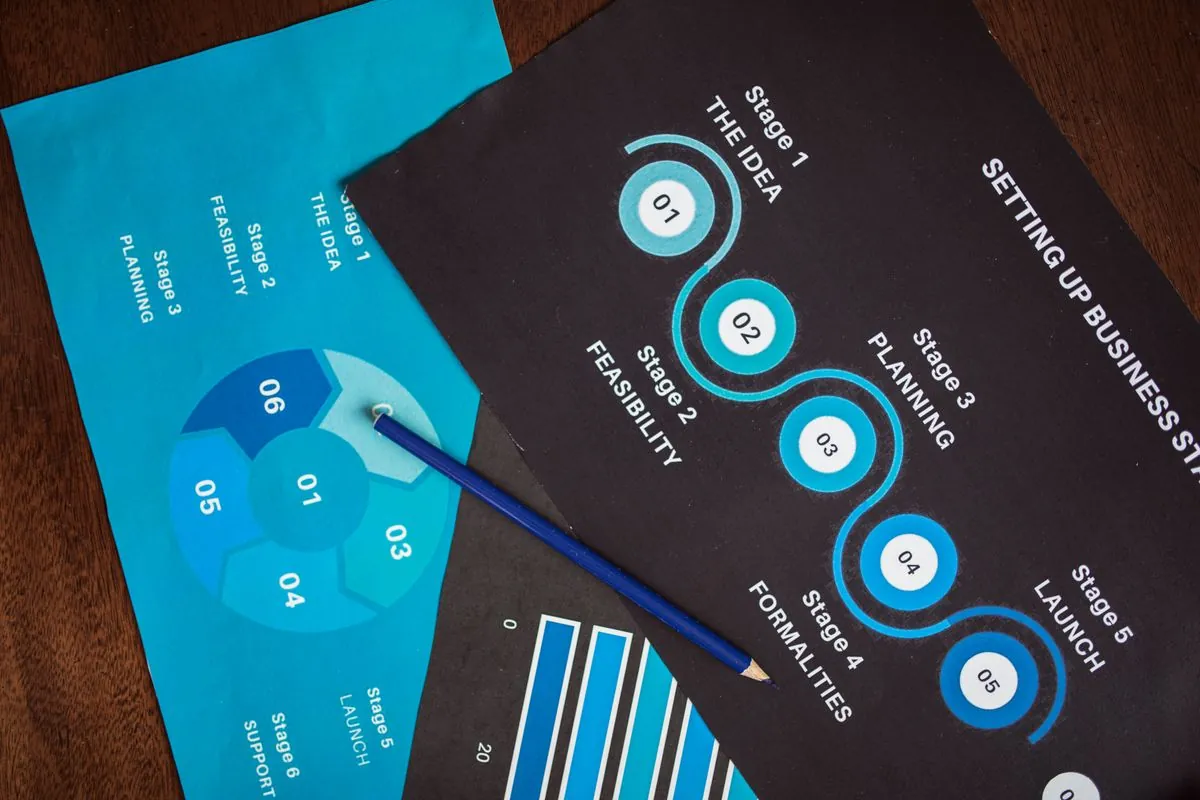
Most business advice fails for a simple reason: it treats growth as a list of tips. Tips do not compound. Systems do. To drive profitable growth that lasts, a business needs five systems working together, in order. Strategy decides what to build and for whom. Finance makes sure the money is there when it is needed. Marketing brings in customers at a cost lower than what those customers are worth. Operations serve those customers efficiently, without the founder firefighting every day. Scaling repeats what works without repeating the cost. Each system feeds the next, and scaling feeds back into strategy — because a bigger business needs a better plan, not just a bigger version of the old one. That loop is the whole blueprint, and the five sections of this guide follow it in exactly that order.
The order matters because each system creates the conditions for the next one. Strategy without finance is a plan you cannot afford; finance without marketing is money with nowhere to go; marketing without operations is a promise you cannot keep; operations without scaling is a business that depends on you forever. And scaling without strategy is growth without direction. That is why this guide follows the loop in order — and why the most reliable way to drive profitable growth is to build the five systems in sequence, then keep improving them in the same order.
How to use this blueprint
If you are starting from zero, read this page in order — the five systems build on each other, and the order matters. If your business already runs but money is tight, start with Section 2 — no marketing plan survives a cash-flow crisis. If you have customers but cannot tell which marketing works, start with Section 3. If the business depends on you personally for every decision, start with Section 4. And if everything works and you are ready to grow, use Section 5 to decide whether you are ready — and what to fix first if you are not. The blueprint works in any order, but it only works as a system: a weakness in any one of the five parts limits all five. That is why this guide exists — to show you the whole machine before you start fixing one part of it.
1. Laying the Foundation for Profitable Growth: Business Strategy and Planning

Every business that manages to drive profitable growth over the long term starts in the same place: a clear strategy written down before the spending begins. Strategy is not a document you file away. It is the set of decisions that tells you which customers to serve, what to offer them, how to reach them, and what to say no to. Without it, marketing, hiring, and product work pull in different directions, and growth — when it comes — is expensive and fragile, because profitable growth depends on every part of the business pulling the same way.
This is the first of the five systems, and it is first for a reason: every later section in this blueprint assumes the decisions made here. The financial plan in Section 2 is built on the customer and the price you choose now. The marketing in Section 3 can only work if you know who you are speaking to. The operations in Section 4 exist to deliver the promise you make here. So this section builds the foundation in four steps: a value proposition customers actually want, market research that puts numbers behind your opportunity, a one-page plan you can use every week, and goals you can track.
Defining Your Unique Value Proposition (UVP)
Your unique value proposition is the single clearest reason a customer should buy from you instead of anyone else. It is not a slogan, and it is not a list of features. It is a promise tied to a specific problem. A useful way to write one is to fill in this sentence: “For [a specific customer] who [has a specific problem], [your product] is [the category] that [the concrete benefit], unlike [the alternative].”
Take a cloud bookkeeping tool built for small accounting firms. A weak value proposition would be “easy bookkeeping software.” A strong one is: “For small accounting firms drowning in client paperwork, our tool is the bookkeeping platform that closes each client’s month in half the time, unlike generic accounting software that was built for large companies.” The difference is specificity: it names the customer, the pain, and the outcome.
Test your value proposition before you build around it. Ask five to ten real potential customers whether the sentence describes a problem they actually have and whether the benefit is worth paying for. If they hesitate, the proposition is not sharp enough yet. A value proposition that survives contact with real customers becomes the backbone of your marketing, your pricing, and your product decisions — and the starting point for any plan to drive profitable growth. It is also the first building block of the business model canvas below.
Conducting Actionable Market Research (TAM, SAM, SOM)
Market research answers a question that enthusiasm cannot: is the opportunity big enough, and can you realistically reach enough of it? The TAM, SAM, and SOM framework turns that question into numbers. TAM is the total addressable market — all the revenue you could earn if every possible customer bought from you. SAM is the serviceable available market — the slice of TAM you can actually serve given your geography, language, product, and channels. SOM is the serviceable obtainable market — the slice of SAM you can realistically win in the near term with the team and budget you have.
Here is a step-by-step example using the same bookkeeping tool. Step one, define the market: small accounting firms in the United States and the United Kingdom. Step two, count the potential customers and set a price. Suppose there are roughly 40,000 such firms, and the tool costs $600 per firm per year. TAM is 40,000 × $600, or $24 million. Step three, narrow to SAM. Only firms with two to twenty staff that already use cloud tools and work in English are a realistic fit — say 12,000 firms. SAM is 12,000 × $600, or $7.2 million. Step four, build SOM from capacity, not hope. With a small sales team in year one, winning 300 firms is a realistic target. SOM is 300 × $600, or $180,000. That last number is the one your hiring and spending plans should be built on, not the $24 million.
These figures are an illustration, not market data — the point is the method. Always validate the numbers with real evidence: interview fifteen to twenty firms, study what competitors charge, and test whether anyone will pay your price before you build the full product. A smaller market with reachable customers is worth more than a huge market owned by established competitors.
Case study: how Slack pivoted on market research. Slack is one of the clearest examples of a company that found its real market by watching what its own team actually used. In 2009, Stewart Butterfield co-founded Tiny Speck to build Glitch, a whimsical multiplayer online game. Glitch launched publicly in September 2011, but the audience was too small to sustain the business, and in November 2012 Butterfield announced it would shut down. While building the game, the distributed team had created its own internal messaging tool — with channels, direct messages, file sharing, and searchable history — because email was too slow and existing chat tools did not meet their needs. After Glitch closed, the team realised that this internal tool solved a problem many other companies shared. They refined it, launched a preview in August 2013, and approximately 8,000 companies signed up within the first 24 hours. Slack launched publicly in February 2014, and in December 2020 Salesforce announced it would acquire the company for $27.7 billion. The lesson is practical, not inspirational: the most valuable product is often the tool you built to solve your own problem, and market research means watching what people actually use — not what they say they want. Butterfield had done this before: an earlier game, Game Neverending, produced a photo-sharing feature that became Flickr, which Yahoo acquired in 2005.
Creating a Lean, One-Page Business Plan
A business plan earns its keep when it helps you make decisions, not when it impresses a reader. For most small businesses, a one-page plan is enough — and it is far more likely to be used than a forty-page document. A useful one-page plan covers nine things: the problem you solve, the customer you serve, your value proposition, your product or service, how you will reach customers, your revenue model, your main costs, your goals for the next twelve months, and the next concrete step.
The Business Model Canvas, created by Alexander Osterwalder and Yves Pigneur and published in their book Business Model Generation (2010), is the best-known way to lay out those nine things on a single page. Its nine building blocks are: customer segments (who you serve), value propositions (why they choose you), channels (how you reach them), customer relationships (how you keep them), revenue streams (how you earn), key resources (what you need), key activities (what you must do well), key partnerships (who you rely on), and cost structure (what it costs). For the bookkeeping tool, the canvas might read: segments — small accounting firms; value proposition — a month closed in half the time; channels — accounting conferences and search; relationships — onboarding calls and a help centre; revenue — $600 per firm per year; resources — the software and a small support team; activities — product development and customer onboarding; partnerships — an integration with a tax software provider; costs — hosting, salaries, and support. Fill in the canvas for one business model at a time, date it, and redraw it as evidence comes in. A canvas is a claim to test, not a plan carved in stone.
The research behind planning is stronger than most founders expect. A review of the academic evidence published by LivePlan found that a meta-analysis of 46 studies covering 11,046 companies concluded that planning improves business performance. An analysis of 622 new ventures in England found that writing a business plan lifted average annual employment growth by 33.4 percentage points, and that founders who completed a plan were 57% less likely to see their business fail. A University of Oregon survey of 2,877 business owners found that those who completed a business plan were nearly twice as likely to grow their business or secure capital as those who did not write one. And among 65 fast-growth family firms, 71% had formal written plans. The pattern is consistent: planning does not guarantee success, but founders who plan are measurably more likely to grow and to survive — and a short plan you revisit monthly beats a long plan you never open.
Setting and Tracking SMART Business Goals to Drive Profitable Growth
A strategy without goals is a wish. SMART goals turn it into something you can manage: Specific, Measurable, Achievable, Relevant, and Time-bound. “Grow the business” is not a goal. “Increase monthly recurring revenue from $8,000 to $12,000 by December 31 by adding 40 new customers at $100 a month” is a goal — it names the number, the deadline, and the mechanism. Break each annual goal into quarterly milestones, assign one owner to each, and review progress weekly in a short meeting where the only question is what changed and what happens next. When a goal is missed, treat it as information, not failure: either the goal was wrong, the method was wrong, or the market moved, and each of those has a different fix. Goals that are written down, owned by one person, and reviewed on a fixed rhythm are the difference between a strategy and a hope — and between a business that drifts and one that manages to drive profitable growth year after year.
Strategy is the foundation, but a foundation is not a business. The plan you have just written now needs money behind it — and that is where most founders discover that a good strategy can still fail to drive profitable growth. The next system is financial management: the discipline that keeps the business alive long enough for the strategy to work.
For a deeper dive into structuring your first steps, read our detailed guide: Key Steps to Build a Successful Business From Scratch. It walks through finding an idea, validating it, and launching — the practical sequence that turns this strategy into a real business.
2. Financial Management and Self-Care That Drive Profitable Growth

Financial management is where the ambition to drive profitable growth meets reality. A business can have a strong product, happy customers, and rising sales — and still fail because the money runs out at the wrong moment. That is why finance is the second system, directly after strategy: the plan from Section 1 tells you what to spend money on, and this section makes sure the money is there when the plan needs it.
This section covers the two sides of that problem: the human side, because financial stress changes how founders think, and the mechanical side, because cash flow, separation of finances, and a reserve are systems you build once and maintain forever. Get these right and every other part of the business gets easier — including the marketing in Section 3, which only works when you can afford to wait for it to pay back.
The Psychology of Financial Self-Care in Business
Financial self-care means deliberately protecting the mental and emotional capacity you need to run a business well. It is not indulgence. It is the recognition that a founder under constant money stress makes worse decisions — and that the stress itself is part of the problem, not just a reaction to it.
The research behind this is unusually clear. In their book Scarcity (2013), economist Sendhil Mullainathan and psychologist Eldar Shafir showed that scarcity — of money, time, or any valued resource — captures mental bandwidth in ways that impair cognitive function. In one study, researchers asked participants to think about a car repair. When the repair cost $150, wealthy and poor participants performed similarly on cognitive tests. When the repair cost $1,500, the poorer participants showed a significant drop in performance — equivalent to roughly a 13-point fall in IQ, or a full night of lost sleep — while wealthy participants were unaffected. The same pattern appeared in sugar cane farmers in India, who receive one large payment a year after harvest: the same farmers performed measurably better on cognitive tests after they had been paid than before, when money was tight. Mullainathan and Shafir call this the “bandwidth tax”: financial worry occupies the mental resources you need for thinking, planning, and self-control, leaving less available for everything else. (Source: Simply Psychology, The Psychology of Scarcity.) Scarcity also creates “tunneling” — an intense focus on the immediate crisis while longer-term concerns fall out of view.
For a business owner, the practical meaning is direct. When you are worried about making payroll, you are more likely to take a bad client, discount too deeply, or delay a decision that matters — not because you lack ability, but because the worry is consuming the bandwidth the decision needs. Financial self-care is the set of habits that reduces that load: separating business and personal money so you always know where you stand, automating savings and payments so fewer decisions are made under pressure, keeping a reserve so a slow month is a problem rather than a crisis, and making the biggest decisions at a calm moment rather than in the middle of a cash crunch. For a deeper treatment of the money principles behind this, see our detailed guide on Entrepreneurial Finance & Money Management.
Mastering Cash Flow vs. Profit
Cash flow and profit are not the same thing, and confusing them is one of the most common reasons growing businesses run out of money. Profit is an accounting result: revenue minus expenses over a period. Gross profit — revenue minus the direct cost of what you sold — is the most useful version of that number for day-to-day decisions, because it shows what is left to cover everything else. Cash flow is the actual movement of money in and out of your bank account. A business can be profitable on paper and still be unable to pay its bills, because the cash has not arrived yet.
Consider a small branding agency. In one month it invoices $18,000 of work and records $11,000 of costs, so on paper it made $7,000 of profit. But only $6,000 of the invoiced amount is actually collected that month — the rest is on 30- or 60-day payment terms — while $9,500 goes out in salaries, rent, and software. Cash falls by $3,500 that month. If the agency started with $10,000 in the bank, it now has $6,500, even though the month was “profitable.” Repeat that pattern for three months and the business is in trouble, despite a healthy profit-and-loss statement.
The fix is a rolling cash-flow forecast, not a better profit margin. List every expected inflow and outflow for the next eight to thirteen weeks, update it weekly with what was actually collected rather than what was invoiced, and watch the lowest point in the forecast. Three habits protect you: invoice promptly and state payment terms clearly, follow up overdue invoices within days rather than weeks, and ask for a deposit on larger projects so you are not funding a client’s work from your own account. Cash flow is the oxygen of the business; profit is the food. You need both, but you feel the lack of oxygen first — and no plan to drive profitable growth survives a business that cannot pay its bills.
Separating Personal and Business Finances
Mixing personal and business money makes it impossible for business owners to know whether the business is actually working. It also creates tax problems, makes financing harder, and turns every personal expense into a judgement call. Separation is a one-time setup with a lasting payoff. Use this checklist:
- Get an EIN. In the United States, an Employer Identification Number from the IRS gives the business its own tax identity, separate from your personal Social Security number. Apply for it before you open accounts or hire anyone.
- Open a dedicated business checking account. All business income goes in, all business expenses come out. Pay yourself a fixed owner’s draw or salary on a set schedule instead of dipping into the account whenever you need money.
- Use accounting software and reconcile it monthly. Tools such as QuickBooks or Xero record every transaction, categorise it, and produce the reports a lender or accountant will ask for. Reconcile the software against your bank statement every month so errors surface while they are small.
- Keep a separate business credit card. It creates a clean record of business spending and protects your personal credit from business cash-flow swings.
- Document every transfer between you and the business. Record owner’s draws and contributions properly so your books, your tax return, and your own understanding of the business all agree.
This separation is also what makes the rest of this guide work: you cannot forecast cash flow, measure gross profit, or build a reserve if the numbers are tangled with your household spending.
Building a 6-Month Business Emergency Fund
An emergency fund is the financial version of the bandwidth protection described above: it buys you the ability to think clearly when something goes wrong. Six months of essential operating costs is a solid target for most small businesses. Start by listing the costs you cannot avoid — rent, payroll, insurance, software, and loan payments — and total them. If those essential costs are $6,500 a month, a six-month reserve is $39,000. That number can look intimidating, so build it gradually: setting aside $1,500 a month reaches the target in 26 months, and you can raise the contribution in strong months.
A practical way to structure the build — and to keep the business ready to drive profitable growth when an opportunity appears — is to adapt the well-known 50/30/20 budgeting rule to business revenue. Direct roughly 50% of incoming revenue to operating costs, 30% to growth and investment (marketing, product, hiring), and 20% to reserves and tax. The percentages are a starting point, not a law — a business with high costs may need 60% for operations and 10% for reserves at first — but the discipline matters more than the exact split: the reserve is funded before discretionary spending, every month, automatically. Keep the reserve in a separate, easily accessible business savings account, not invested in anything you cannot sell quickly. Review the target quarterly, or whenever payroll, rent, or revenue changes materially.
Struggling to keep personal and business budgets on track? Explore our step-by-step tutorial: How to Create a Savings Plan for Your Financial Goals. It covers goal-based budgeting, savings buckets, and automation — the personal-finance side of the same discipline.
With the money under control, the next question is how to bring in customers without spending more to win them than they are worth. That is the third system: marketing, customer acquisition, and measuring return on investment — the system that lets a stable business drive profitable growth.
3. Marketing, Customer Acquisition, and Measuring ROI for Profitable Growth

Marketing only helps you drive profitable growth when you know which customers you want, which channels reach them at a sensible cost, and whether the money you spend comes back as profit. Many small businesses do the opposite: they spend on the channel that is easiest to buy, count clicks as success, and discover months later that the customers they won cost more than they are worth. This section fixes that order — define the customer first, choose channels by evidence, calculate what each customer costs and is worth, and then track return on investment on profit, not on traffic. It is the third system because it depends on the first two: the strategy from Section 1 tells you who the customer is, and the financial discipline from Section 2 tells you how much you can afford to spend winning them — and how long you can wait for the money to come back.
Building Data-Driven Buyer Personas for Profitable Growth
A buyer persona is a research-based profile of your ideal customer — not a guess, and not a demographic label. It is built from interviews, support conversations, sales notes, and analytics, and it is specific enough that you can write marketing for one person rather than for “everyone.” A high-converting persona covers five elements:
- Demographics and role. Who is this person — job title, company size, industry, location, and income or budget range? A persona for a marketing manager at a 50-person company is a different person from a persona for a solo founder.
- Pain points. What problem costs them time, money, or sleep? Use their own words where possible. “I spend every Friday reconciling invoices by hand” is a pain point; “wants efficiency” is not.
- Goals. What are they trying to achieve, and by when? A goal such as “close the monthly books in two days instead of five” tells you exactly what outcome to promise.
- Objections. What would stop them buying? Common objections are price, switching cost, doubt that it works, and the effort of changing a process. If you do not know the objections, your marketing cannot answer them.
- Preferred channels. Where do they actually look for solutions — search, a specific social platform, email newsletters, peer recommendations, or industry events? A persona that never reads email should not be marketed to by email.
Build one persona for your most valuable customer type first, then add a second only when the first is genuinely different. Interview five to ten real customers, record their exact words, and update the persona every six months. A persona built on evidence keeps every later marketing decision honest: if a channel or message does not fit the persona, it does not get the budget — because only marketing that fits the customer can drive profitable growth.
Choosing the Right Marketing Channels for Your Budget
No channel is best in general. Each one suits a different job, a different budget, and a different stage of the customer journey. The table below compares the four channels most small businesses use, so you can match the channel to the job rather than to the trend.
| Channel | Strengths | Weaknesses | Best for |
|---|---|---|---|
| SEO (search engine optimisation) | Compounds over time; captures people actively searching; no cost per click | Slow to show results; needs consistent content; rankings can shift | Businesses with a clear product and a website that can rank for buying-intent searches |
| PPC (pay-per-click ads) | Immediate traffic; precise targeting; easy to test and switch off | Cost rises with competition; stops the moment you stop paying; easy to waste money without tracking | Testing an offer quickly, or reaching buyers for a time-limited campaign |
| Email marketing | Very low cost per contact; direct access to people who already know you; easy to measure | Needs a list, which takes time to build; deliverability and unsubscribes limit reach | Nurturing existing leads, announcing offers, and winning repeat purchases |
| Social media | Builds awareness and trust; good for visual products and community; inexpensive to start | Organic reach is limited; time-consuming; hard to attribute sales directly | Brand building, community, and reaching customers who are not yet searching |
Start with one channel that fits your persona and your budget, measure it properly for at least two to three months, and only then add a second. A business that does one channel well will outperform a business that does four channels badly.
Calculating CAC (Customer Acquisition Cost) and LTV (Lifetime Value)
Two numbers decide whether your marketing can drive profitable growth: what a customer costs you, and what that customer is worth. Customer acquisition cost (CAC) is the total sales and marketing spend in a period divided by the number of new customers won in that period. Customer lifetime value (LTV) is the total value a customer generates over the whole relationship — commonly estimated as average purchase value × purchase frequency × customer lifespan, and more usefully on a gross-profit basis so it reflects what is left after the cost of delivering the product or service. The ratio between them, LTV divided by CAC, tells you whether acquisition pays. A ratio of 3:1 — three dollars of lifetime value for every dollar of acquisition cost — is a widely used rule of thumb for a healthy business, though the right target depends on your margins and how confident you are in the lifetime estimate.
Work through a concrete scenario. Suppose you spend $1,000 on advertising and win 10 new customers. Your CAC is $1,000 ÷ 10, or $100 per customer. Each of those customers spends $200 on their first order, so the campaign brings in $2,000 of revenue. That looks like a win — until you remember that revenue is not profit. If your gross margin is 50%, the gross profit from those first orders is $1,000, exactly the amount you spent. On the first purchase alone, the profit-based return is zero. The campaign only pays if customers come back.
Now extend the picture. Suppose each customer buys three more times in the year, spending $200 each time. That is four purchases × $200, or $800 of revenue per customer in year one. At a 50% gross margin, the contribution is $400 per customer, so the one-year LTV is $400. The LTV-to-CAC ratio is $400 ÷ $100, or 4:1 — healthy, and it explains why the campaign is worth running despite breaking even on the first order. The lesson is to judge acquisition on lifetime contribution, not on the first sale, and to be honest about the assumptions: the margin, the repeat rate, and the lifespan are estimates, so test them against your actual records and use the same cost definitions every time you compare channels.
Tracking and Optimizing Marketing ROI for Profitable Growth
Return on investment turns the CAC and LTV numbers into a decision. The profit-based formula is: ROI = (incremental profit − marketing investment) ÷ marketing investment × 100. Using the scenario above, if the campaign ultimately generates $4,000 of gross contribution against the $1,000 spend, the ROI is ($4,000 − $1,000) ÷ $1,000 × 100, or 300%. If it generates only $1,000 of contribution, the ROI is 0%. The same spend can be a success or a failure depending on what customers do after the first purchase, which is why retention and repeat buying belong in every ROI conversation.
Three habits keep ROI honest — and they are what separate marketing that genuinely helps you drive profitable growth from marketing that merely spends money. First, count the full cost: advertising spend plus content, tools, agency fees, and the staff time spent managing the campaign. Counting only ad spend flatters the result. Second, define one conversion event per campaign — a completed purchase or a qualified enquiry, not a page view — and use the same definition when you compare channels. Third, review results on a fixed rhythm: weekly for campaign delivery, monthly for channel comparison, and quarterly for the bigger question of whether a channel still deserves its budget. A channel that is improving month by month and beating your other channels deserves more money; a channel that is flat or declining deserves a test, a fix, or a pause.
Attribution — deciding which touchpoint gets credit for a sale — is where most ROI reports go wrong. Three common models are first-touch, which credits the first interaction (useful for seeing how customers discover you); last-touch, which credits the final interaction before purchase (useful for seeing what closes the sale); and multi-touch, which shares credit across several interactions (more complete, but more complex). None of them proves causation: a customer who saw a social post, read a blog article, and then clicked an ad may have bought because of any of those, or because a colleague recommended you. Treat attribution as an estimate, use one model consistently, and compare it with your actual sales records before you move budget.
Want to ensure every dollar you spend is working for you? Read our comprehensive breakdown: Digital Marketing & ROI Measurement. It covers the full ROI calculation, worked examples, the main analytics tools, and the most common measurement mistakes — the depth this guide deliberately leaves to that detailed breakdown.
Marketing brings the customers in. But customers only stay — and only become profitable — if the business can serve them well, on time, and without the founder doing everything personally. That is the fourth system: operational efficiency — and without it, no amount of marketing can drive profitable growth.
4. Operational Efficiency and Overcoming Common Business Challenges to Drive Profitable Growth

Operational efficiency is the quiet multiplier behind every attempt to drive profitable growth. When operations run well, each new customer costs less to serve, each order moves faster, and the team has time for the work that actually grows the business. When they do not, growth creates more problems than it solves: orders go out late, customers wait, cash gets tied up, and the founder spends the day firefighting instead of leading. This is the fourth system because it is where the promises of the first three systems are kept or broken — the strategy says what to deliver, the money pays for it, the marketing brings the customer, and operations actually deliver. This section deals with the four operational questions that matter most: where the work gets stuck, what to automate, how to handle supply and hiring pressure, and how to adapt when the market moves.
Identifying and Eliminating Operational Bottlenecks for Profitable Growth
A bottleneck is the one step in a process that limits everything else. Fixing it gives you more capacity than any other single change, because every other step is waiting on it — and that extra capacity is often the cheapest way to drive profitable growth. The three bottlenecks below appear in small businesses more than any others, and each has a direct fix.
1. The same information re-keyed across systems. A customer fills in a form, someone copies the details into a spreadsheet, someone else copies them into the accounting tool, and a fourth person emails the customer to confirm. Every copy is a chance for an error and a delay. The symptom is usually a customer complaint about a wrong address or a missing order. The fix is a single source of truth: one system holds the customer record, and the other tools read from it instead of being fed by hand. Even a simple shared form that writes directly into your customer system removes most of the re-keying.
2. Work with no clear owner. A task that belongs to “the team” belongs to no one — a lesson most business owners learn the expensive way. It sits untouched, two people do it differently, or it is discovered only when a customer asks about it. The symptom is missed deadlines and duplicated effort. The fix is one accountable owner per recurring process, named in writing, with a shared task list that shows the owner, the deadline, and the current status. Ownership does not mean the owner does all the work — it means one person is responsible for making sure it gets done.
3. Inventory or capacity that does not match demand. Too much stock ties up cash that could fund growth; too little loses sales and disappoints customers. The symptom is either a warehouse full of slow-moving items or a regular apology to customers for stockouts. The fix is a simple reorder rule: set a reorder point for each key item (average daily use multiplied by supplier lead time, plus a small safety stock), review it monthly, and let the rule — not a gut feeling — trigger the order. The same logic applies to service capacity: if your team is booked three weeks out, that is a signal to hire, raise prices, or narrow the offer, not to work longer hours.
Find the bottleneck first, before buying software or hiring. Walk through your most important process as a customer would, note where work waits, and fix the biggest constraint. Small improvements at the bottleneck are worth more than large improvements anywhere else.
Automating Repetitive Tasks for Maximum Productivity
Automation pays when it removes work that is repetitive, rule-based, and high-volume — and it fails when it is applied to a broken process. Automate the process after you have fixed it, not before. Three tools cover most small-business automation needs.
Zapier connects the apps you already use and moves information between them automatically. A new enquiry from your website form can create a record in your customer system, notify the right person in your team chat, and add a follow-up task — without anyone copying anything by hand. It is best for simple, reliable connections between two or three apps.
Make is a visual automation platform for longer, more complex workflows. You build the workflow as a diagram, with branches and conditions — for example, when an order is placed, check stock, send the customer a confirmation, create an invoice, and, if the order is above a threshold, flag it for a personal follow-up. It suits businesses whose processes have several steps and exceptions.
Asana is a work management tool with built-in automation rules. It can assign a task to the right person when its status changes, set a due date when a project starts, or move a completed task to the next stage automatically. It is best for teams that need to see who is doing what, by when, without chasing updates in chat or email.
The scale of the opportunity is large, and it is worth stating carefully. The McKinsey Global Institute, in its November 2025 report Agents, robots, and us, found that currently demonstrated technologies could, in theory, automate activities accounting for about 57% of US work hours — 44% by AI agents and 13% by robots — and that large-scale adoption could generate about $2.9 trillion in US economic value per year by 2030. That figure is a measure of technical potential, not a forecast of job losses, and the report is explicit that adoption will be gradual. For a small business, the practical reading is simpler: the routine, rules-based work in your business — data entry, copying information between systems, chasing routine updates — is exactly the kind of work that can be automated first. Start with one repetitive task, automate it, measure the time saved, and then move to the next. Each hour you recover is an hour the team can spend on the work that actually helps the business drive profitable growth. Do not automate a process you have not first simplified.
Navigating Supply Chain and Hiring Hurdles
Supply and hiring problems usually arrive together, and both are made worse by waiting too long to act. On the supply side, the core discipline is to know your lead times and your alternatives before you need them. Keep at least one backup supplier for your most important input, agree payment terms in writing, and review your supplier list every quarter — not when a delivery fails. A small buffer of your fastest-moving stock is cheaper than a lost customer. On the hiring side, the expensive mistake is hiring for technical skill alone. Early employees need to work with uncertainty, take ownership, and communicate clearly, and those qualities matter more than a polished CV. Define the role, the outcomes, and the decision rights before you advertise, and hire only when a clear business need exists rather than to relieve a temporary rush. For a fuller treatment of these challenges — funding pressure, weak demand, competition, and the rest — see our guide to Common Business Challenges and How to Solve Them.
Adapting to Market Changes with Agility
Markets move, and the businesses that survive are the ones that notice early and respond in an orderly way. Build adaptation into your routine rather than treating it as an emergency. Review customer behaviour, competitor activity, and your own numbers monthly, and ask one question: what has changed since last month, and does it change what we should do? When a real disruption arrives — a lost customer, a price rise, a new competitor, a sudden drop in demand — use a four-step crisis framework. Assess: gather the facts before acting. What exactly happened, how big is it, and what is the time frame? Communicate: tell the people affected what you know, what you do not know yet, and when you will update them. Silence creates rumours that are worse than the news. Adapt: choose the smallest effective response first — reallocate budget, adjust pricing, change a supplier, pause a campaign — and set a date to review whether it worked. Review: once the immediate pressure passes, record what happened, what worked, and what you will do differently next time. A short written review turns a crisis into a system improvement. Agility is not about reacting faster to everything; it is about having a routine that catches change early and a framework that keeps the response calm and proportionate.
When the four systems above work — strategy, finance, marketing, operations — the business is ready for the fifth: scaling. That is where growth stops being about working harder and starts being about building something that grows without you.
5. Scaling Up: Strategies for Long-Term Profitable Growth
Scaling is where the work of the previous four sections pays off — and where it is tested. A business that has a clear strategy, disciplined finances, measured marketing, and efficient operations is ready to grow without breaking — and ready to drive profitable growth at a larger scale. A business that tries to scale before those foundations are in place usually discovers its weaknesses at the worst possible moment: when demand is highest and there is no time to fix them. This section is the fifth and final system, and it is deliberately the shortest of the five: it explains the difference between growth and scaling, how to tell whether you are ready, how to expand, and how to build the systems and culture that let a larger business run well. The detailed scaling strategies live in our detailed guide on sustainable growth — this section shows you when and how to use them.
Growth vs. Scaling: Understanding the Critical Difference
Growth and scaling sound alike, but they describe different economics. Growth means adding resources at roughly the same rate as revenue: you earn more, but you also spend more. Scaling means increasing revenue much faster than costs, so each additional dollar of revenue brings more profit than the last. The difference is leverage — whether your business model lets you serve more customers without a proportional increase in effort, staff, or expense.
Consider a bakery. Growth is opening a second shop: revenue rises, but so do rent, wages, ingredients, and management time. If the second shop earns the same margin as the first, the business is bigger but not more efficient. Scaling is a different move: the bakery records its most popular recipes as an online baking course. The course is made once and sold many times, so each additional sale costs almost nothing to deliver. Revenue can rise sharply while costs stay nearly flat. Most businesses need both — growth to build the customer base and scaling to make that base more profitable — but the order matters. Scale a broken process and you get a bigger broken process. To drive profitable growth, first make the model work at a small scale, then look for the parts of it that can be repeated without adding the same cost each time.
The 5-Point Checklist for Scaling Readiness
Before you commit money to expansion, check five things honestly. Rate each one as ready, needs improvement, or not ready — and fix cash-flow weaknesses before committing to anything else.
- Consistent positive cash flow. The business generates more cash than it spends, month after month, after paying owners a fair amount. If cash flow is only positive in good months, fix the underlying problem first: pricing, payment terms, or costs.
- Documented standard operating procedures (SOPs). The important work is written down clearly enough that a new person can do it without the founder standing over them. If a process exists only in one person’s head, the business cannot grow beyond that person.
- A scalable tech stack. Your tools can handle more customers, more orders, and more data without slowing down or breaking. That means a customer system, an accounting tool, and a website that will not need to be replaced the moment volume doubles.
- Strong middle management. There are people below the founder who can make decisions, supervise work, and solve problems without escalating everything. Scaling without this layer turns the founder into the bottleneck.
- Proven product-market fit. Customers buy repeatedly, refer others, and stay. Demand is demonstrated by repeat purchases and referrals, not by initial interest or a single successful launch.
If all five are ready, the business can scale. If two or more need improvement, fix those first — the expansion will still be there when you are ready. For the detailed scaling strategies behind this checklist, see our detailed guide: Strategies for Sustainable Business Growth.

Expanding into New Markets or Product Lines
Expansion takes three main forms, and each one carries a different risk. Geographic expansion means selling the same product in a new place — a new city, region, or country. It tests whether demand travels, and it requires understanding local regulations, pricing, distribution, and payment methods before committing. Demographic expansion means selling to a new customer group — for example, a tool built for freelancers adapted for small agencies. It tests whether the product fits a different buyer with different needs. Product-line extension means offering something new to your existing customers — a new flavour, a premium tier, or a complementary service. It is usually the lowest-risk form of expansion because the customers and the trust already exist.
A good example of product-line extension done well is Slack. It began as a team messaging tool, then expanded into a platform: an extensive integrations ecosystem that connected with project management, code repositories, customer support, and almost every major business tool. Each integration made Slack more central to its customers’ work, and the expansion built on the product people already used rather than asking them to buy something unfamiliar. The pattern is worth copying: expand from strength, test demand with a limited launch before committing fully, and make sure the new offer serves the customers you already have before you chase customers you do not. That discipline is what lets expansion drive profitable growth instead of diluting it.
Building a Scalable Company Culture and Documenting SOPs
Culture is what happens when the founder is not in the room, and it is what determines whether a larger business runs well or falls apart. Business owners who scale successfully treat culture as a system, not a slogan. A scalable culture is built on a small number of clear expectations: customers come first, decisions are explained, mistakes are reported quickly rather than hidden, and good work is recognised. Write those expectations down, repeat them when you hire, and enforce them consistently — especially when it is inconvenient. A culture that only exists in a speech is not a culture.
Standard operating procedures are the practical half of culture. An SOP turns a good way of working into a repeatable one. A useful mini-template has five parts: Purpose — what this procedure achieves and why it matters. Owner — the one person accountable for it. Steps — the actions in order, written plainly enough for a new hire to follow. Quality check — how you know it was done right, and what to do if it was not. Review date — when the procedure is next checked and updated. Start with the five procedures that matter most: handling a new customer, fulfilling an order, resolving a complaint, invoicing and collecting payment, and onboarding a new employee. Document those five well, and the business can grow without the founder having to supervise every task. That is what it means to drive profitable growth at scale: the business earns more because the system, not the founder’s hours, does the extra work.
Ready to take your company to the next level? Start with our foundational guide: Strategies for Sustainable Business Growth. It covers the six sustainable growth strategies in full — the detailed playbook this guide points to.
Conclusion
Building a successful, sustainable business is not a sprint; it is a marathon that requires strategic planning, financial discipline, and continuous adaptation. The five systems in this blueprint — strategy, finance, marketing, operations, and scaling — are the marathon itself: each one makes the next one possible, and a weakness in any one of them limits all five. To drive profitable growth that lasts, do not try to fix everything at once. Work the blueprint in a ninety-day sequence instead. In the first thirty days, fix the foundation: write the one-page plan, separate the money, and build the cash-flow forecast. In the next thirty days, fix the front of the business: define the customer, pick one marketing channel, and start measuring CAC, LTV, and ROI properly. In the final thirty days, fix the machine: remove the biggest bottleneck, automate one repetitive task, and document the five core procedures. At the end of ninety days, run the scaling checklist honestly. If all five points are ready, you are ready to scale. If not, you now know exactly what to fix — and which section of this guide to revisit first.
Use this blueprint as your foundational reference. Explore the detailed guides linked from each section for deeper dives, and take the next actionable step toward transforming your business today. A business that manages to drive profitable growth, year after year, is not built on one clever idea. It is built on a system, followed in order, and improved every month. That system is now in front of you.